

Shedding season: Why the gut and feeding deserve attention too
What changes in autumn, what we observe in our own horses and what suitable care can look like.
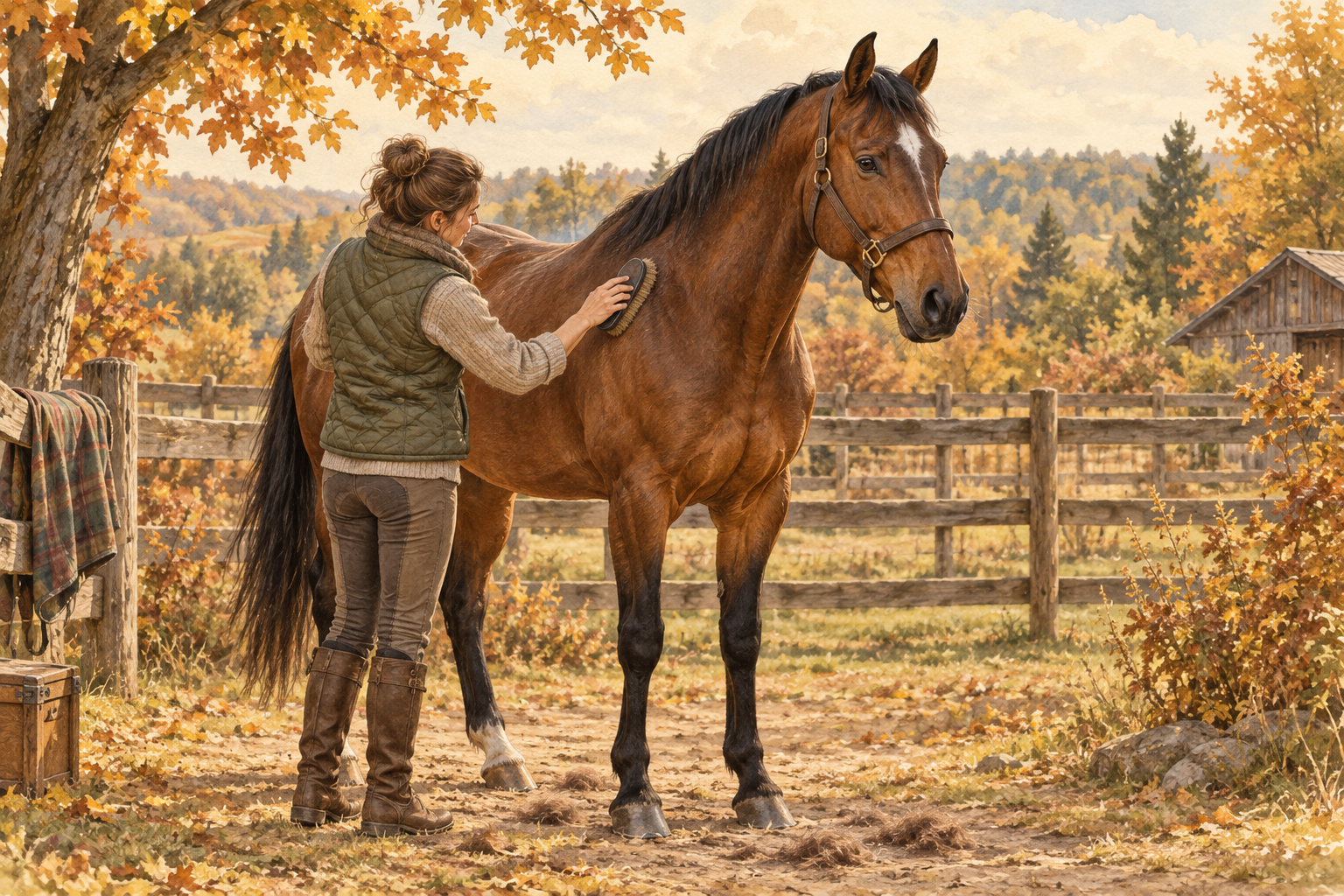
You stroke your horse once and half of its summer fur is hanging on your jacket. The hair flies when you clean, it's fresh in the morning and sometimes still really warm at lunchtime. Autumn is here. And with it comes the question that comes up again every year: Can I still support my horse in some way during its coat change?
I think the question is absolutely legitimate. Ultimately, we want our horses to get through this time well. In the stable we then talk about herbs, oils and various supplements. Maybe you have long since found something that you have had good experiences with. For Sandra and me, this view of the horse always includes feeding. What is it already getting? What does digestion look like? And has something just changed in everyday life?
That's exactly what this post is about. Because between a pack of additional food and a suitable supply there are sometimes a few questions that are really worth it.
What actually happens when you change fur
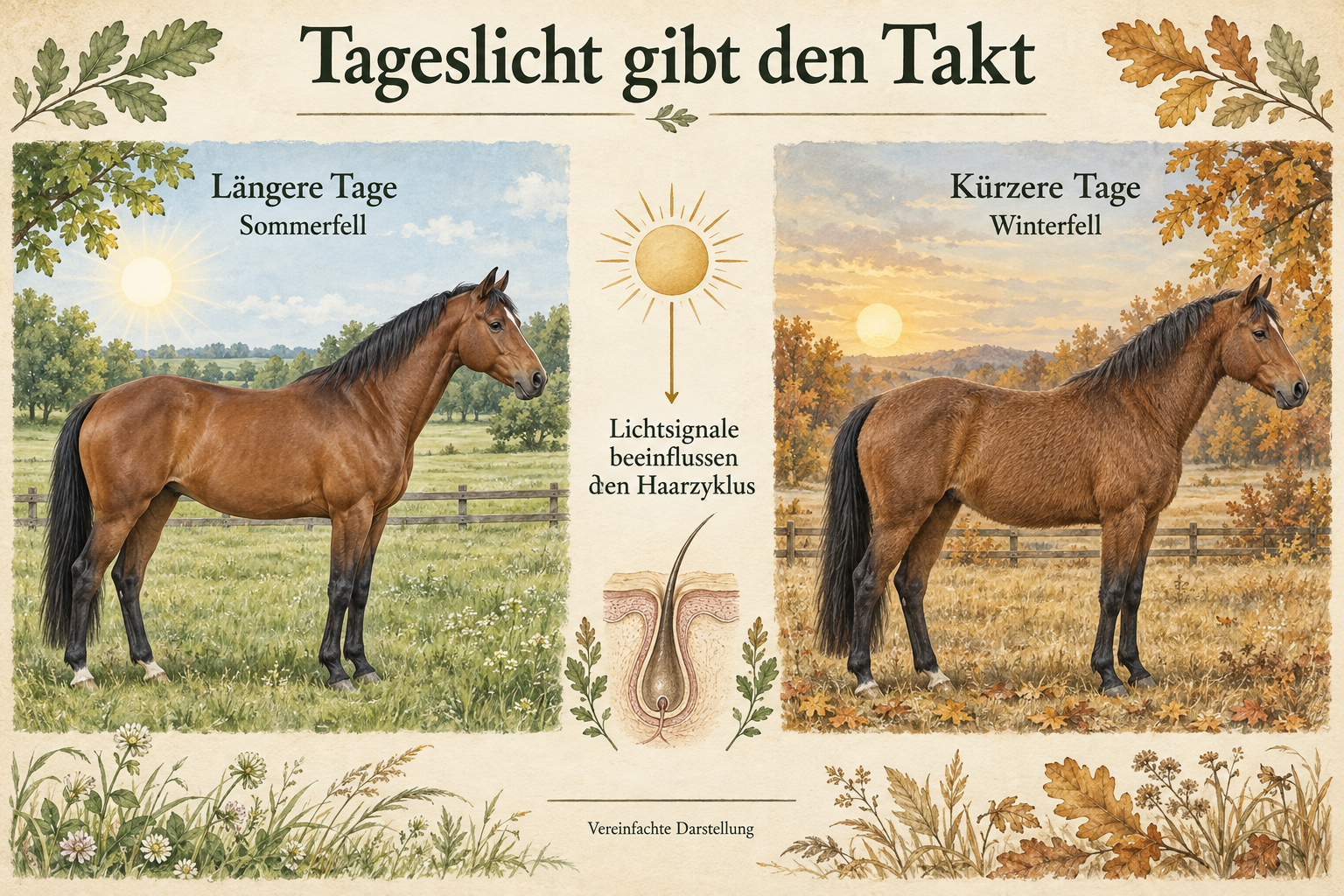
The change between summer and winter coats is part of the horse's natural annual rhythm. An important pacemaker is the length of the day. That's why the build-up of the winter coat begins while we're still standing at the stable in our T-shirts on some days. The body reacts to the changing light conditions and prepares for the coming season. [1]
New hair needs building materials. A suitable supply of energy, protein, vitamins and minerals is therefore essential. What matters is what the entire ration provides. From flying hair alone, neither a specific deficiency nor an additional amount for the feeding trough can be derived. [2]
At the same time, more often happens in autumn than just shedding: grazing times become shorter, different hay is added to the feed, and everyday training routines change. If you just look at the skin, you may miss part of the situation. I would like to keep an eye on these changes in particular.
The intestines belong at the table
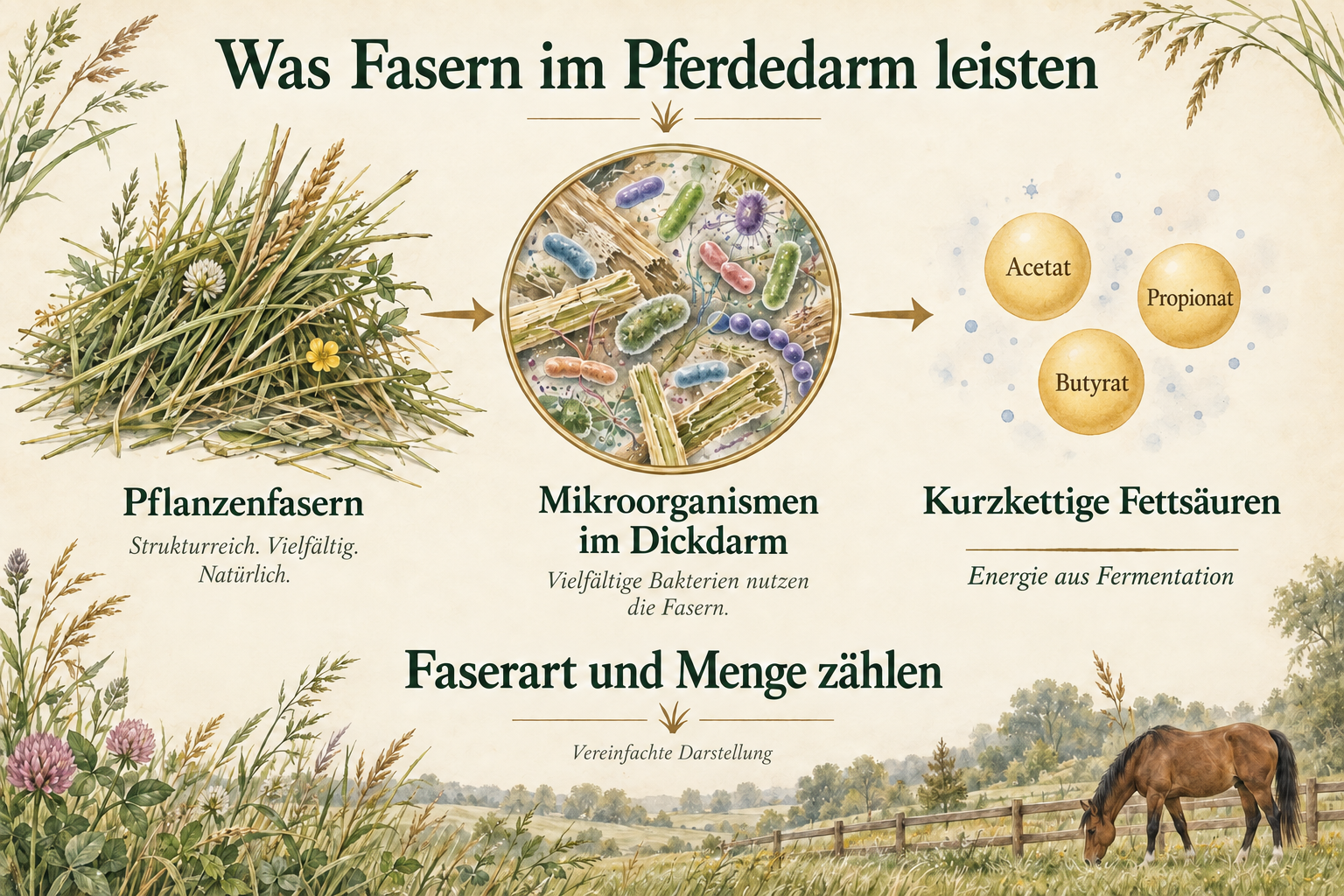
A horse thrives on a diet that suits its digestion. In the appendix and large intestine, microorganisms help to utilize plant fibers. This produces, among other things, short-chain fatty acids that the horse can use as an energy source. Good roughage is therefore a central part of the daily supply. [2]
This interaction can change when the diet is changed. A horse study examined how abrupt ration changes affect the composition of intestinal microorganisms and fiber breakdown. This is a good reason to consciously plan changes in feeding and monitor digestion. However, it does not mean that the shedding itself automatically triggers free fecal water. [3]
In everyday life this means: How much roughage is actually available? How is its quality? Are there longer eating breaks? Can a horse in a group get its food undisturbed? The answers can be very different, especially when horses are kept together. A closer look at what's going on in the stable often helps more than further guesswork.
Before we add anything, it's worth taking a look at what ends up in the feeding trough and on the pasture every day.
What we are currently observing with our own horses
We have experienced how tangible digestion can become in everyday stable life. Our fiber supplement ran out, and our horses went without it for two days. Their droppings became noticeably softer again, sometimes more like cow pats, and free fecal water appeared. After we started feeding the supplement again, this returned to normal within one to two days.
For me, this is a striking observation. I see our horses every day and notice when something changes. Exactly experiences like this make me take a closer look and continue to monitor our feeding. At the same time, based on this temporal context alone, I cannot say with certainty what the cause is behind the change or whether a longer dose would have a lasting effect.
I'm telling you this because I know these questions from our own everyday lives. You stand in front of the horse, want to improve something and try to understand what is good for him. It helps to record such observations: What was fed, what changed, what did the horse droppings look like? This is how a feeling becomes a process that we can talk about together.
Fiber: look at the mix and the amount
When you hear fiber, the first thing you probably think of is hay. That's a good start. There are also different types of fibers that are converted differently by microorganisms. These include, for example, certain oligosaccharides and other fermentable plant components. Studies on horses show that such additives can change the composition of the intestinal microbiome. However, the results depend on the type of fiber, the amount and the rest of the feeding. [4]
This is exciting for advice: targeted fiber supplementation can be a question that we look at together. It does not replace sufficient roughage or the clarification of recurring digestive problems. And a result from a study with a specific fiber cannot simply be transferred to every mixture.
Sandra and I therefore look at the individual horse. What is it already getting? What changes have there been? What supplements are already being given? From this it can be deduced which information is still missing and which support is actually possible. This overview is particularly valuable when several products end up in the trough.
What role can Omega-3 play?
Fat supply is also part of the ration. Horses need essential fatty acids in their diet. It's worth taking a closer look at omega-3: ALA from plant sources as well as EPA and DHA are different fatty acids. An oil should therefore be judged by its composition and the appropriate amount. There are also sources of EPA and DHA from microalgae. The suitability of the entire recipe for the horse remains crucial. [2, 8]
A study of 30 horses compared camelina, linseed and rapeseed oil over 16 weeks. The fur evaluations showed improvements compared to baseline, but no differences between the three oils. There was no group without oil that was examined at the same time. The study is therefore an interesting note on the subject of feeding and coat quality, but is not proof of a particularly effective coat change oil. [5]
It is possible to investigate even more specifically whether a change in intake becomes visible in the fatty acid profile. In a study of 50 horses, following supplementation containing EPA and DHA, the corresponding fatty acid levels in whole blood increased. Blood values were examined, not the success of a coat change treatment. [6]
For me, this is a sensible approach: If we have a question about fatty acid supply, appropriate analyzes can provide additional information. A fatty acid profile is a building block. It does not show all nutritional deficiencies or the function of the liver and kidneys and must be classified according to horse-friendly standards.
A good supplement begins with a specific question: What should it contribute to the care of this horse?
And what about liver, kidneys and the previous supplements?
Maybe you already use herbs or another supplementary food for the shedding period. This belongs in the common conversation just as much as hay and mineral feed. Different products can have very different ingredients and purposes. That's why we check what is already covered and where quantities may overlap.
The liver and kidneys take on important tasks in metabolism. However, normal shedding alone does not indicate a disease of these organs and no need for a detoxification treatment. If there are corresponding abnormalities, their clarification should be part of the treating practice. For many supplements to support a diseased liver, the study situation in horses is also limited. [7]
Our contribution can lie in organizing the supply in an understandable way: roughage, minerals, fatty acids and, if necessary, selected fibers. This works best if you know what is already being fed. This way you can discuss complementary options without randomly combining products with each other.
This makes the change of fur a good reason to look
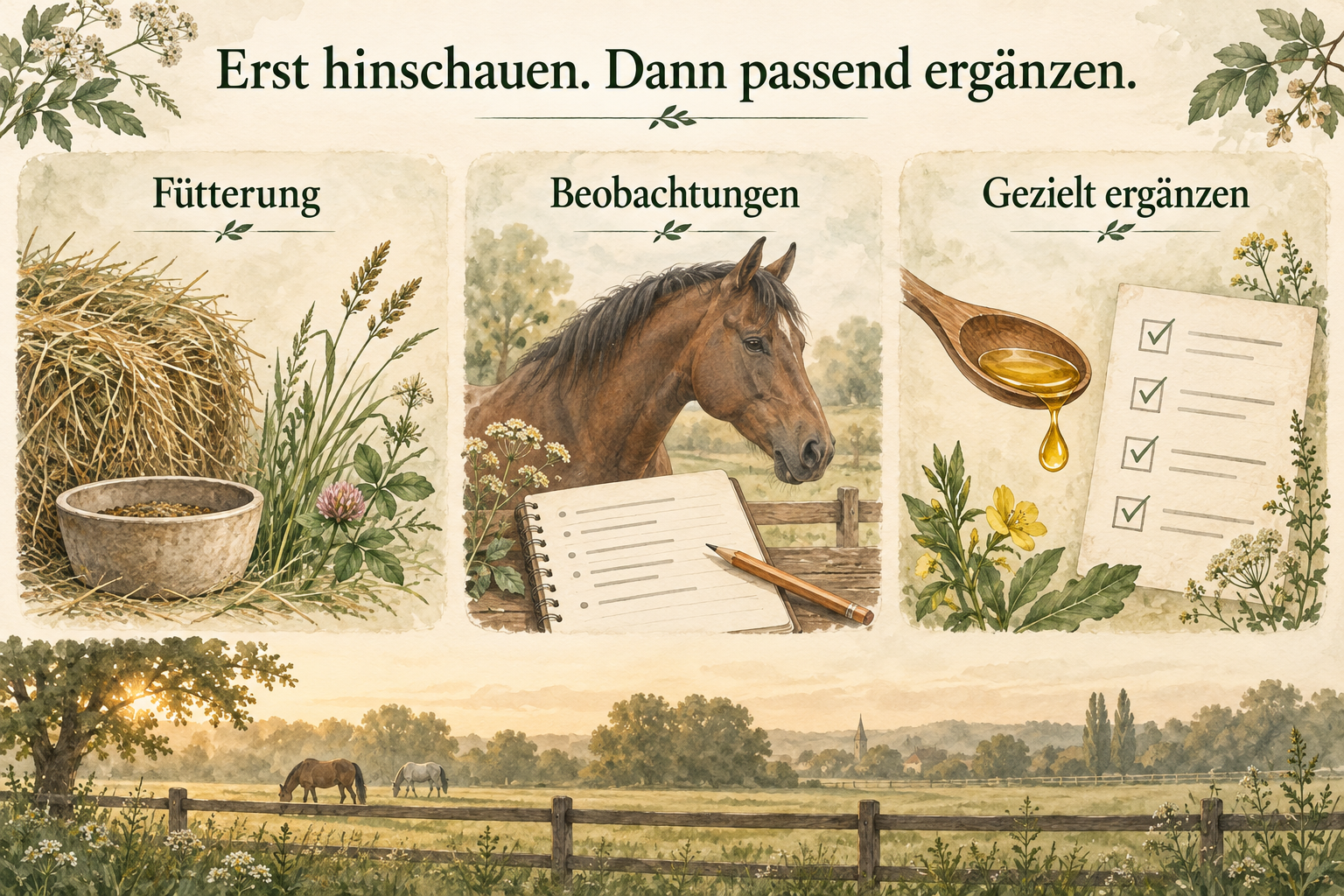
You don't need a complicated table at first. Write down for a few days what food and supplements your horse gets, preferably with quantities. Note whether hay, grazing time or exercise has changed. Monitor appetite, body condition, coat and horse droppings. A photo can help to compare changes more accurately later.
If free fecal water occurs again and again, the horse loses weight or eats significantly less, the cause should be clarified by a veterinarian. If you have signs of colic or watery diarrhea, it is important to seek prompt veterinary help. We shouldn't simply explain such changes with the season.
With your observations, Sandra and I can then look at feeding together. Which question is in the foreground? Is a more detailed ration check worth it? Can a fatty acid profile help? Which supplement suits the horse and what it is already getting?
Maybe what you need most is an understandable overview. Perhaps this will result in targeted support. That's exactly what a personal conversation is for. Write to us in the contact form what is currently bothering you with your horse. Then we'll see together how we can support you in a meaningful way.
Sources and further literature
-
University of Nebraska / Extension Horses (2020): Mare Seasonality – Day Length and Coat Change
-
Merck Veterinary Manual (2026): Nutritional Requirements of Horses and Other Equids – Ration and nutrient supply
-
Original study (2021): Sequential Modulation of the Equine Fecal Microbiota and Fibrolytic Capacity Following Two Consecutive Abrupt Dietary Changes and Bacterial Supplementation
-
Glatter et al. (2019): Modification of the equine gastrointestinal microbiota by Jerusalem artichoke meal supplementation
-
Original study (2023): Effects of dietary camelina, flaxseed, and canola oil supplementation on skin and coat health parameters in healthy adult horses
-
Pearson et al. (2022): Dose-Dependent Increase in Whole Blood Omega-3 Fatty Acid Concentration in Horses Receiving a Marine-Based Fatty-Acid Supplement
-
Addis (2023): Management of hepatopathy in horses - classification of complementary measures for liver diseases
https://www.wevc.co.nz/wp-content/uploads/Management-of-Hepatopathy-in-Horses-Alice-Addis.pdf
-
Elzinga et al. (2019): Effects of Docosahexaenoic Acid-Rich Microalgae Supplementation on Metabolic and Inflammatory Parameters in Horses With Equine Metabolic Syndrome
This article provides general knowledge. Personal observation describes a temporal connection and does not prove a general product effect. Recurring complaints should be clarified by a veterinarian.
Studies on individual fibers, oils and blood values are not proof of effectiveness for other mixtures or for easier shedding. A consultation can include paid analyzes and supplements.
All images are AI-generated illustrations. They show simplified connections and no documented treatment results.
For stables, clubs and practices
Free introductory talk at your location (German)
Understanding equine health. Making a difference together.
Do you run a riding stable, are you involved in a riding club or work in a veterinary practice, in animal physiotherapy or animal osteopathy? And would you like to give your adjusters, members, customers or your team understandable health knowledge?
Then bring us to you for a free introductory talk (German). We talk about feeding, fiber, intestinal health, obesity and the role of exercise - with reference to everyday stable life and space for your questions. We will coordinate the topic, scope and date together.
Select “Free introductory talk (German) for stable, club or practice” in the form and write to us where you are and who you would like to reach.
What does your horse need right now?
Would you like to take a closer look at your horse's feeding? Do you have questions about fiber or a suitable analysis? Write to Sandra and me. Together we will clarify what information we need to provide meaningful advice. You can also request your presentation for a stable, club or practice team here.
Contact: marc@probalance24.com · Write to us via our contact page.
If you would like to know which products we use, please take a look here in the ProBalance shop .
Would you like to find out more about the topic and also read the scientific evidence and studies on this article? Click here.