

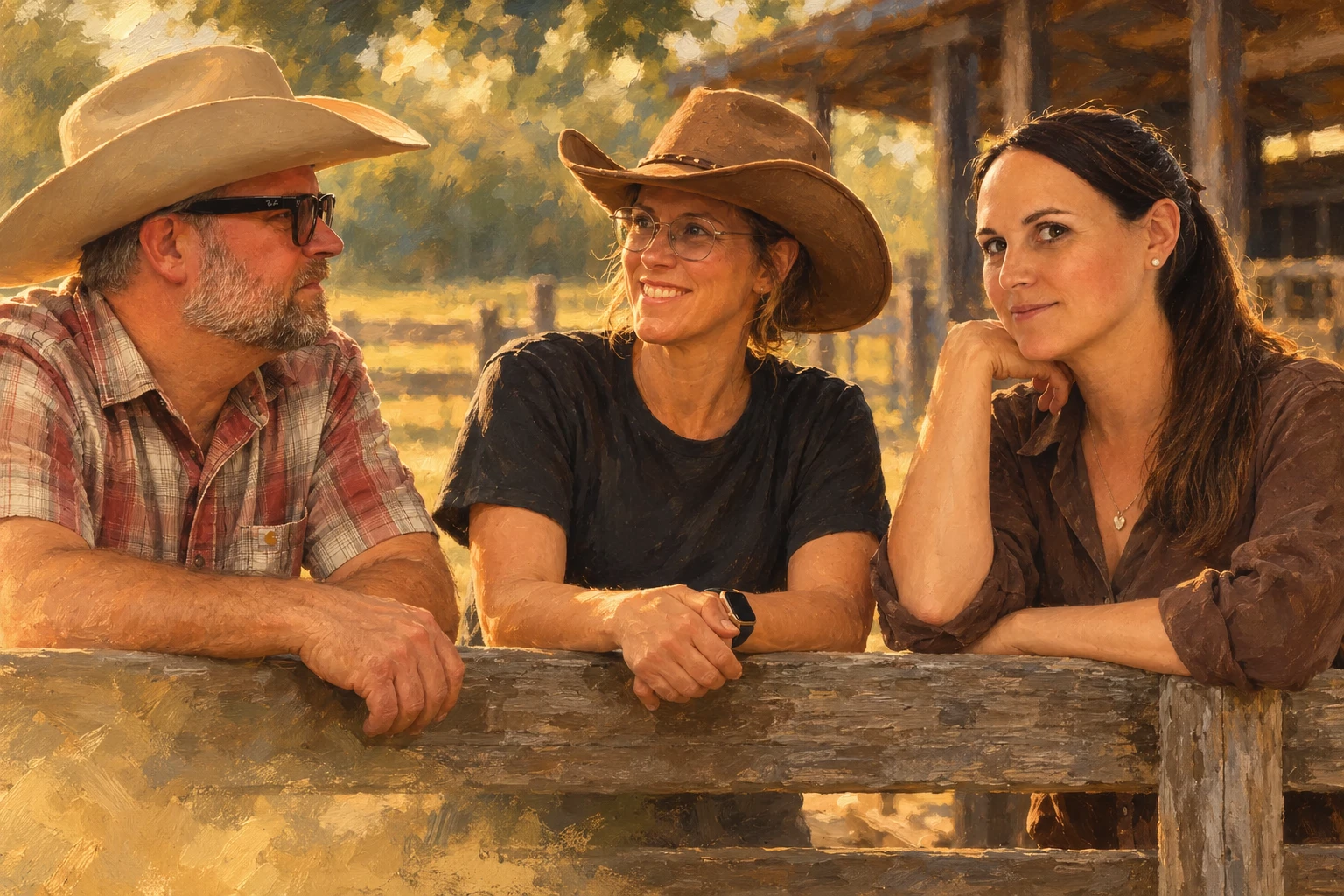
Groundwork as a modular system: More than a book about horses
Why Jenny's new book is something very special for Sandra and me - a personal recommendation about horses, learning and friendship.
There are books that you buy because a topic interests you, and there are books that you realize as soon as you open them that they will have a completely different meaning for you. For Sandra and me, “groundwork in a modular system” by Jenny Drees clearly belongs to the second category. Of course, we have been interested in horse training, groundwork, classic handwork, bosal and communication for many years. Nevertheless, for us this book is not just another horse book, because the woman who wrote it is now a very good friend of our family and a person who has accompanied and helped shape our journey with our horses for many years.
That's why I can't and don't want to write completely neutrally about this book. I know Jenny not only as a trainer and author, but as a friend. And maybe that's exactly the reason why, as I read it, I kept not only thinking, "That's interesting," but rather, "Yes, that's exactly what Jenny is."
From a chance meeting to a friendship
We actually met Jenny in a completely unspectacular way in the riding arena. At the time, she was giving riding lessons to a stable colleague and was currently working on the canter pirouette with her. I was also somehow in the hall - I honestly don't remember what exactly I was doing there - and we started talking. Somehow we hit it off straight away, without there even being any mention of us taking lessons from her at the time.
Some time later, Sandra bought a saddle from Jenny and, of course, test rode it in her presence. Jenny watched Sandra and Valea and gave her a few pointers that worked surprisingly well. This initially led to lessons for Sandra, and at some point I also joined them, and over the years we have learned an incredible amount from Jenny: classic handwork, fine communication, work on the bosal, movement sequences, communication through riding aids and, above all, the ability to not only look at the visible behavior when a problem arises, but to ask ourselves why it arises in the first place.
Somewhere along that shared journey, a trainer became a friend and eventually someone we naturally see as part of our lives. While we were writing this article, Sandra said of Jenny: 'She has become a big part of our lives, and sometimes I actually feel like her twin sister.' It is hard to dismiss the idea altogether – the two are surprisingly alike in many ways. Whether we will one day discover a shared branch of the family tree remains to be seen.
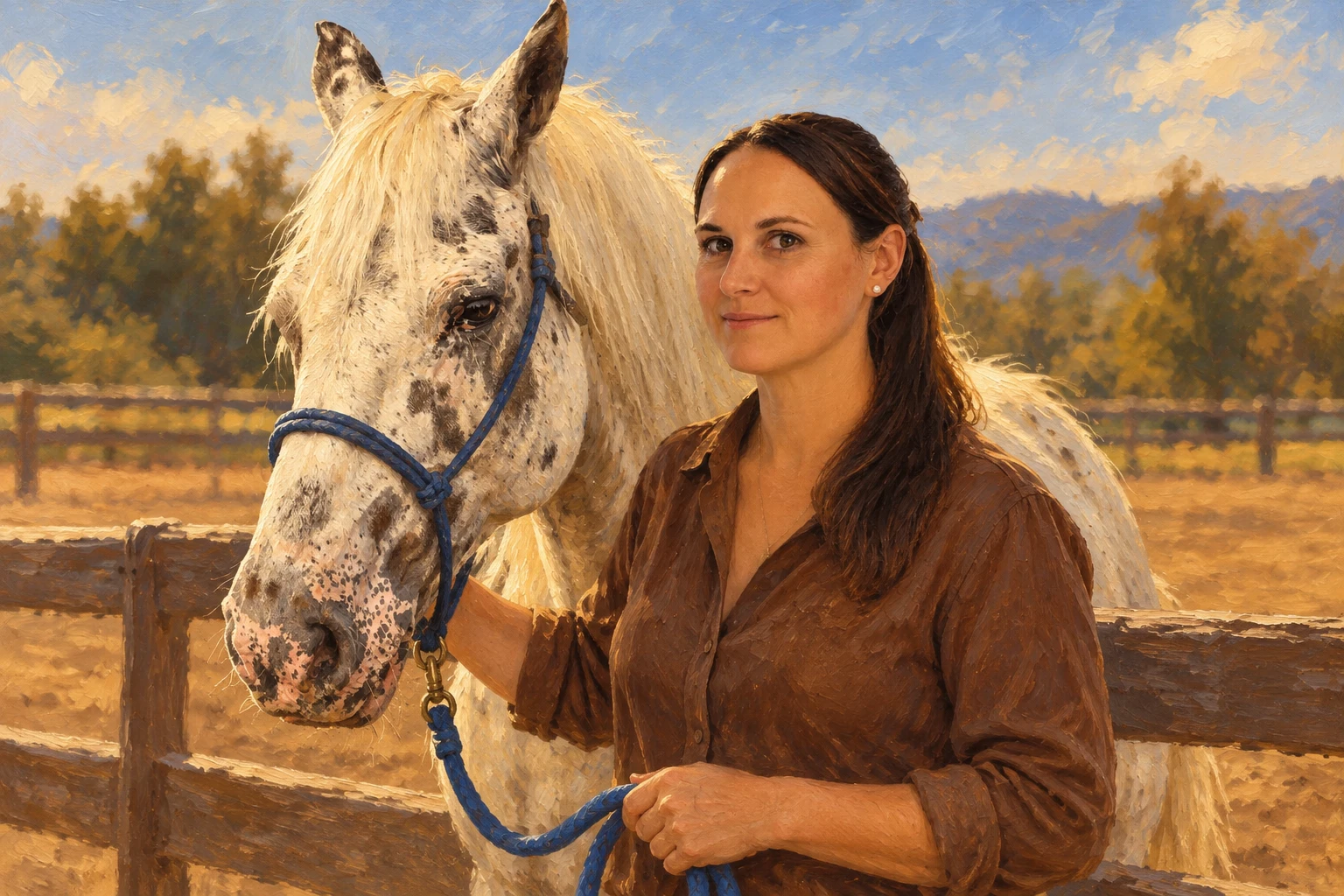
Do we really always have to be the boss?
One heading in Jenny's book particularly spoke to me: "Do we really always have to be the boss?"
Because there are still training concepts in the horse world in which the relationship between people and horses is ultimately understood as a boss-employee relationship. The person decides, the horse executes. Partnership is sometimes even viewed as unrealistic because, ultimately, someone always has to lead.
It is precisely at this point that I take a different path - and that is exactly why I find myself so much in Jenny's thoughts. Of course a horse needs leadership, rules and boundaries. A horse with a body weight of 500 or 600 kilograms cannot simply decide whether it respects my personal boundaries or whether it would prefer to push me aside today. But for me, leadership and dominance are two completely different things.
I don’t have to prove to my horse every day that I’m stronger or constantly explain to him that I’m “the boss.” In my opinion, what a horse needs is a person who is understandable, reliable, consistent and fair and who can provide guidance when a situation becomes difficult. For me, that doesn't contradict a partnership at all. On the contrary: After all, a partnership does not mean that everyone can do whatever they want at any time. It means that responsibility, trust and mutual respect form the basis.
“What a horse really needs is orientation.” – Jenny Drees, groundwork in the modular system, p. 17. [1]
“That’s just how you do it”
Another point that I really liked while reading is Jenny's approach to tradition. In the horse world there are an incredible number of things that are ultimately justified with a single sentence: “That’s just how you do it.”
That's no longer enough for me as a sole justification.
I love many traditional forms of horse training, enjoy working with the bosal myself and am intensively involved in classic handwork. But for me, tradition should never mean that we stop thinking. Just because something has been done for decades or centuries does not automatically mean that it makes sense for every horse today. Conversely, of course, not everything old is bad. What is crucial is that we know why we do something.
In the book, for example, Jenny takes up the habit of leading, saddling or mounting horses predominantly from the left. There were historical reasons for this. Today, however, one can ask whether a horse is not better trained if such things naturally work from both sides.
And I completely agree with Jenny. However, I also have to admit: My horse should be able to do it - I can't do it particularly well myself. For me, mounting or saddling from the right quickly ends up with me looking like I've seen a horse for the first time in my life. So there is still potential for development.
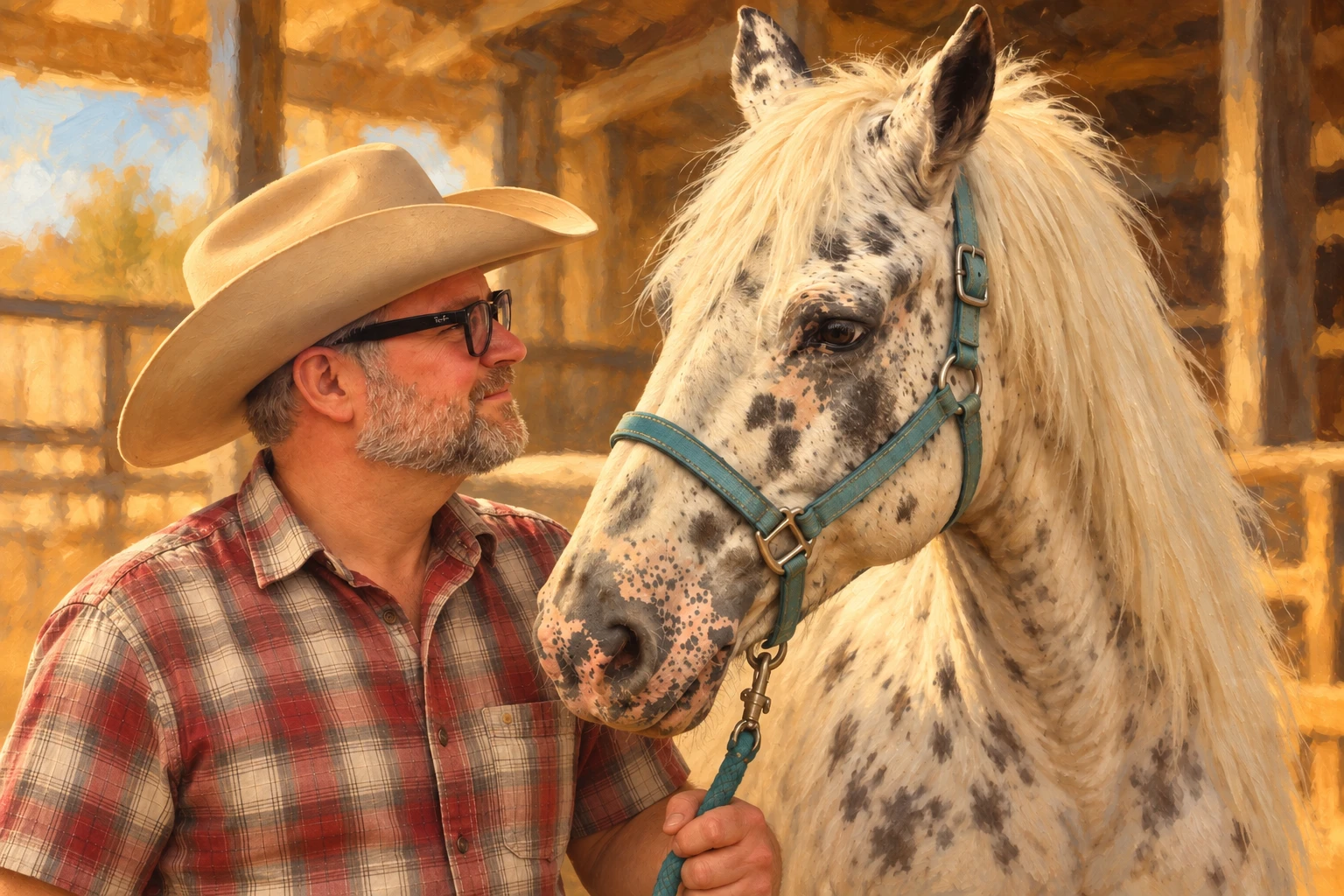
Sometimes the horse isn't that stubborn
One of the most important ideas in the book for me is that many supposed training problems are ultimately communication problems. And that's exactly what forces us as humans to look within ourselves.
Anyone who knows my mare Spirit knows that she definitely has her own opinion. I have called her incredibly stubborn many times and probably continue to do so. However, over the years I have discovered that a surprisingly large part of this supposed stubbornness has to do with how clear my own body language and communication through riding aids are.
Since I have been consciously working on myself, my body language and the precision of my riding aids, Spirit has suddenly become significantly less “stubborn”.
You notice this particularly clearly when other people sit on it. For example, Vicky, Jenny's best friend, can sit on Spirit and just ride off. There is surprisingly little need for discussion. On the other hand, I have experienced with other good friends that Spirit was firmly convinced that they didn't have to move at all.
Of course this horse has character and of course she also tests limits. But not every “no” from the horse automatically means: “I don’t respect you.” Sometimes it simply means: “I have no idea what you want from me right now.”
And for me that is exactly one of the most valuable messages in Jenny's book. Of course we can push a horse harder, apply more pressure or use more help. But we can also first consider whether we are communicating understandably.
This is more uncomfortable because we can no longer automatically blame the horse. But it changes an incredible amount.
A modular system instead of Scheme F
Sandra and I have learned how important this idea is, especially with our own horses. Spirit and Valea could hardly be more different in many areas. They both bring their own personalities and experiences, and what works great for one horse may be completely wrong for another.
That's exactly why I like the image of the modular system so much. There are basics, building blocks and connections that you can learn. Jenny starts with communication and learning theory, works through leading positions, backwards, sideways movements and the control of fore and hindquarters through to free leading, free circling and other exercises.
But these building blocks do not produce the same result in the same way for every horse. I have to look at which horse is standing in front of me, what it has already understood and what it needs right now.
And that's exactly what I think is so cool about this book: I don't have to read it from cover to cover. I can also take it with me to the stable and think: What do I actually want to achieve with my horse? What building blocks do we need for this, what is already working and what do we still need to work on? Then I look for the appropriate passages and work out the desired lesson step by step. If a basis is missing along the way, I go back to this building block. This turns a book into something that I can really work with in everyday life - suitable for my horse and what we are currently dealing with.
For me, good horse training can therefore never be about dull working through a fixed program.
Why this book means more to us
Maybe that's where Jenny's book, her work, and our friendship connect for me. Jenny is not someone who decided at some point that she had found the one truth about horses and has been passing it on ever since. She observes, learns, questions, tries out and develops her work further.
And that's exactly what I think is incredibly important in a good trainer. Many years of experience are valuable, but twenty or thirty years of experience does not automatically mean that you should do the same thing for twenty or thirty years. For me, further training also means being prepared to question your own opinion.
That's why, for me, “groundwork in a modular system” is much more than a collection of exercises. Underneath all the practical instructions lies an attitude that runs through the entire book: taking responsibility for your own communication, not just wanting to let the horse function, understanding connections and designing training in such a way that clarity can lead to trust.
And probably the greatest compliment I can give this book is a very personal one: As I read it, on many pages I recognize not only the trainer Jenny Drees, but also the person Jenny, whom we now know so well.
We have not only heard much of what is in this book in lessons, but have also experienced it with our own horses. We've seen Jenny look for solutions when a standard answer doesn't work, and we've benefited from it ourselves.
That's why I'm incredibly happy that this knowledge is now between two book covers and can reach people who may never have the opportunity to take lessons from Jenny in person. And yes, I'm also a little proud of our friend, because this book is based on many years of work, experience, learning, questioning and obviously an incredible amount of heart.
For Sandra and me, in addition to all the technical aspects, there is one thing above all else: gratitude. For what we were able to learn from Jenny, for how often she helped us and our horses, for the fact that she changed our perspective on certain things and, above all, for the fact that a chance encounter in a riding arena eventually led to a friendship that no longer has to have much to do with horse training to be important.
Sometimes horses don't just make people think about themselves. Sometimes they bring together exactly the right people.
And for that, dear Jenny, we are damn grateful to you.
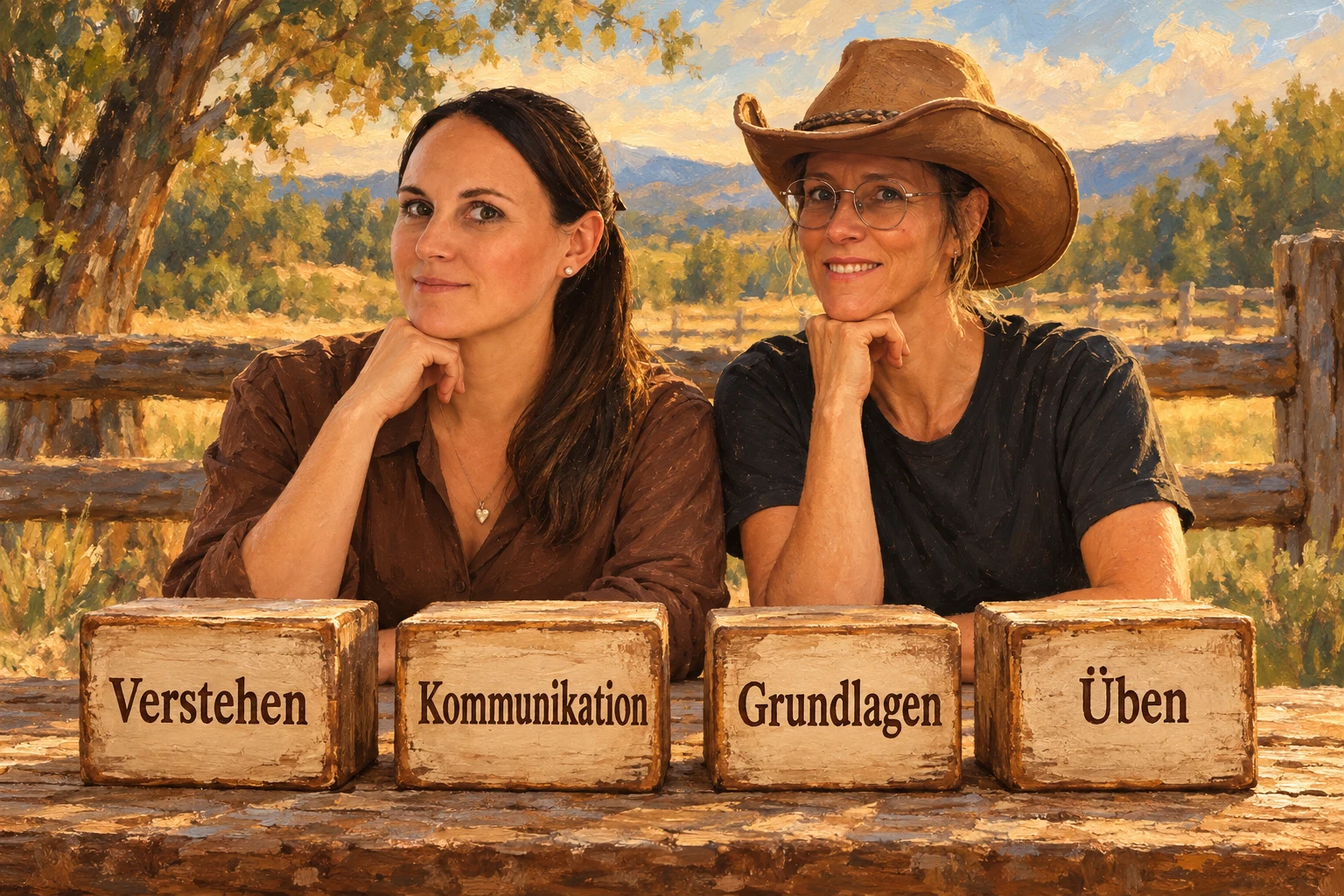
Get to know Jenny and discover the book
If you would like to find out more about Jenny and her work, you can find insights into her horse training, lessons and courses on her website “Blindly Follow Horses”. You can order the book directly from the publisher's shop.
Sources and further literature
-
Jenny Drees: groundwork in a modular system. Logical horse training: combination of learning theory, communication and practical exercises. Müller Rüschlikon. Quote and chapter title: p. 17. ISBN 978-3-275-02386-8.
https://motorbuch-versand.de/mueller_rueschlikon/42386-bodenarbeit-im-baukastensystem
-
Jenny Drees: Blindly Follow Horses – her official website with insights into horse training, lessons and courses.
This personal book recommendation describes our friendship with Jenny and our own experiences.
The short book quote was checked against the book page provided. Personal memories and assessments come from Marc and Sandra.
All images are standalone AI-generated illustrations based on reference photos. They do not show any original illustrations from the book and do not document any specific teaching situations.
For stables, clubs and practices
Free introductory talk at your location (German)
understand bridles. Communicate more finely with each other.
Do you run a riding stable, are you involved in a riding club or work in a veterinary practice, in animal physiotherapy or animal osteopathy? And would you like to give your adjusters, members, customers or your team understandable knowledge about horse-friendly equipment?
Then bring us to you for a free introductory talk (German). We talk about bridles, how they work, the importance of a light hand and the possibilities of the bosal - with reference to everyday stable life and space for your questions. We will coordinate the topic, scope and date together.
Select “Free introductory talk (German) for stable, club or practice” in the form and write to us where you are and who you would like to reach.
What would you like to think about with us?
Would you like to give us feedback on the article or do you have questions about our experiences with Spirit and Valea? Write to Sandra and me. You can also request a introductory talk (German) for your stable or club here. For Jenny's lessons and courses, please use the link to her website above.
Contact: marc@probalance24.com · Write to us via our contact page.
If you would like to know which products we use, please take a look here in the ProBalance shop .
Would you like to find out more about the topic and also read the scientific evidence and studies on this article? Click here.