

Osteoarthritis in horses in winter: Making everyday life easier
Safe exercise, a suitable environment and conscious feeding: How you can accompany your horse through the cold months.
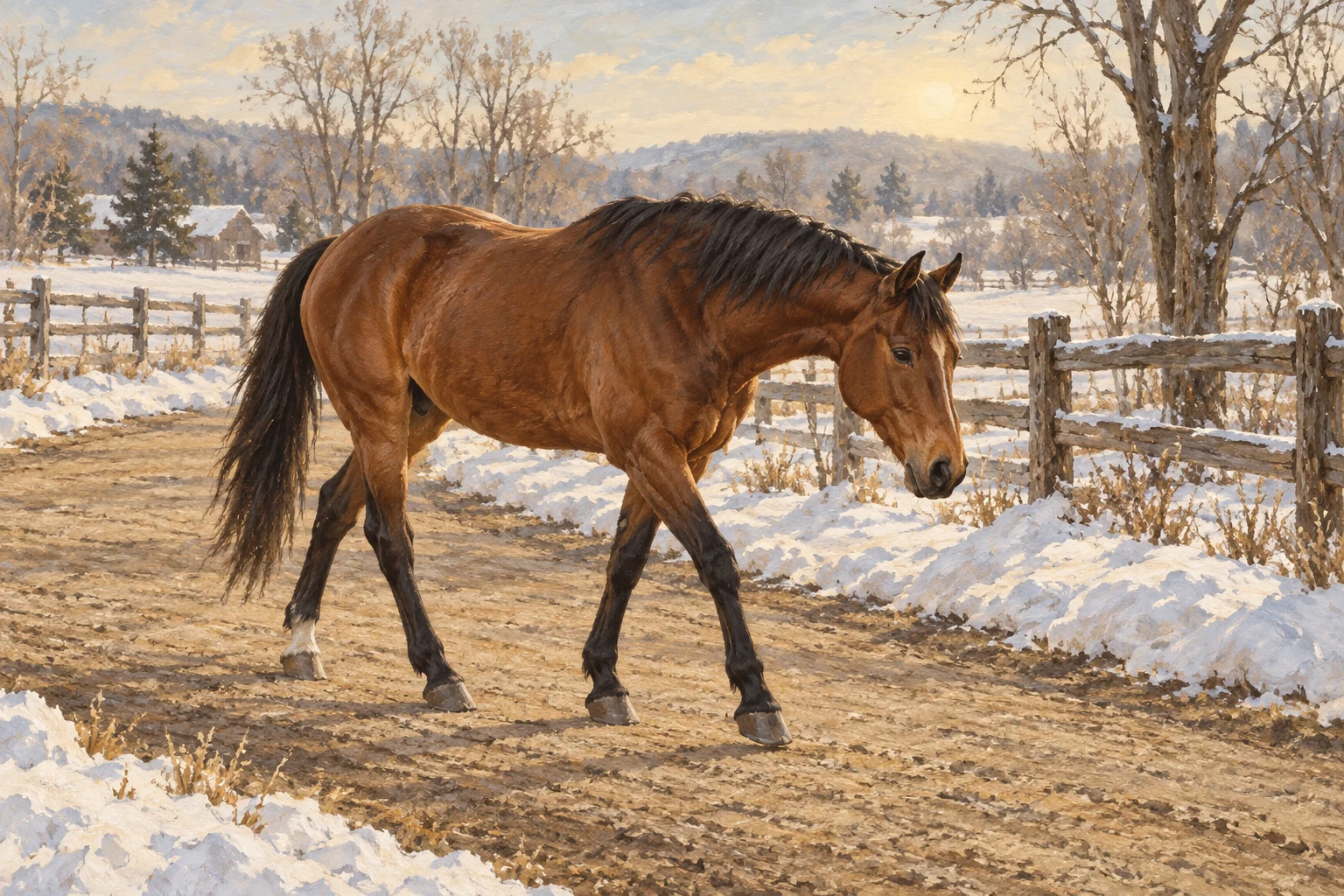
You arrive at the stable in the morning. It is cold, the ground is hard, and your horse's first steps are more cautious than usual. Perhaps you already know your horse has osteoarthritis. Perhaps someone says, 'That's just how it is in winter.' That alone would not reassure me. I want to know what we can adapt in everyday life to help this horse through the cold months as comfortably as possible.
A new feed supplement is not the first thing I think of. I think about the route to the hay feeder, the hours between our visits and whether a horse really feels comfortable using its resting area. Feeding matters too, of course. A winter plan involves more than what we put in the feed bucket each evening.
Our article about recurring lameness was about taking a close look at joints and muscles. Here I would like to go a step further with you: How can everyday winter life be organized sensibly if you have already diagnosed osteoarthritis?
Not all stiffness is simply the weather
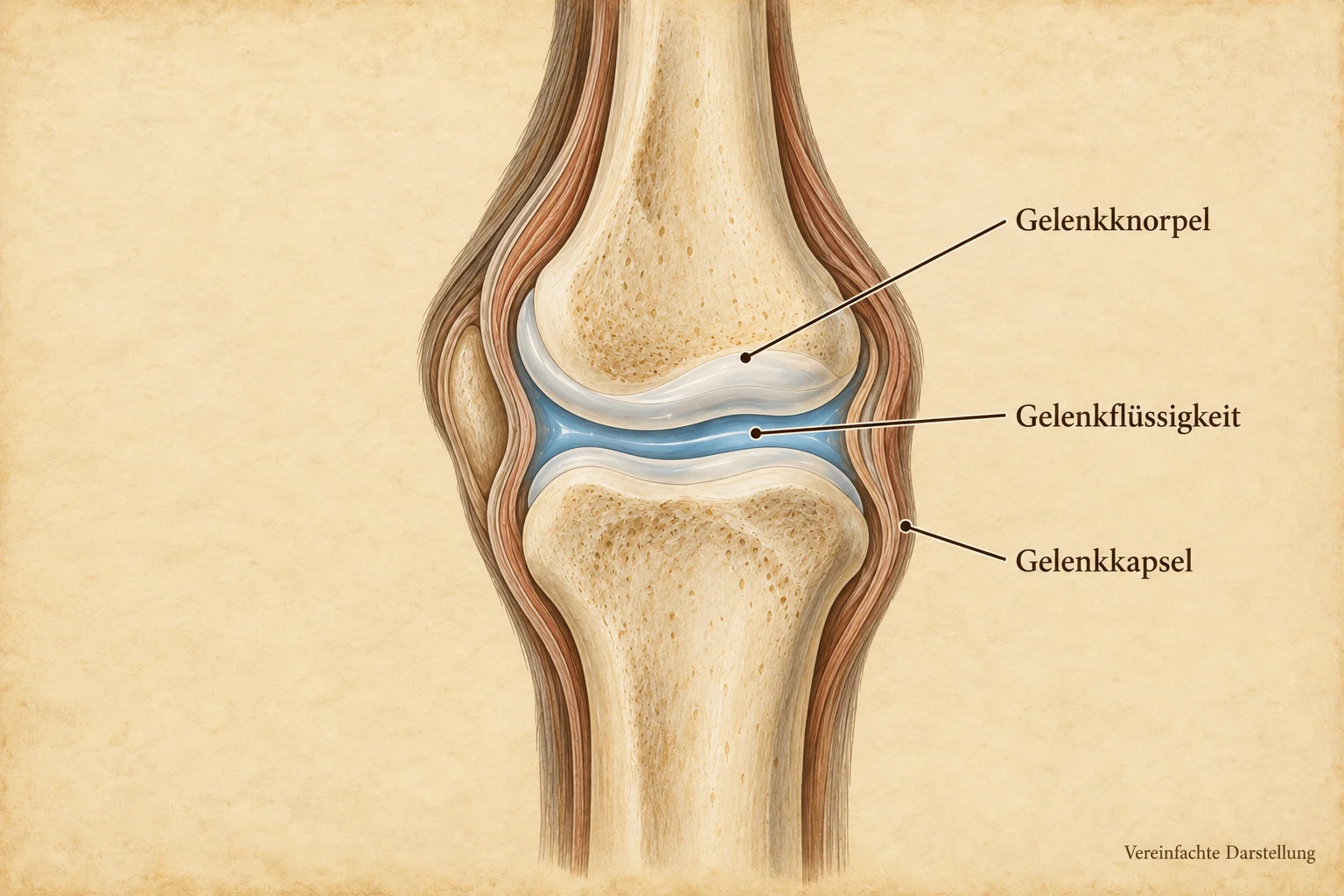
Osteoarthritis affects the entire joint. Changes to cartilage and other joint structures can be related to inflammation, pain and reduced mobility. How clearly this shows up varies from horse to horse. A change in movement should therefore not be dismissed as normal simply because of the time of year. [1]
If a horse runs worse in winter, it's worth looking at everything that has changed: more standing time, less free movement, different surfaces, a different ration. It cannot be concluded from this that cold weather inevitably worsens osteoarthritis in every horse. I would rather describe the specific situation than leave the whole explanation to the thermometer.
A sudden, significant lameness, a hot or swollen joint, or a leg that is barely bearing any weight should be checked by a veterinarian as soon as possible. A horse with known osteoarthritis can also have an additional problem. Please do not try to simply “move away” such a change. [1]
A horse doesn't have to be severely lame for us to take its changed movements seriously.
Movement needs the right conditions
In the case of chronic joint problems, adapted, regular exercise can be part of the management. Which load makes sense depends on the findings and the current condition. The veterinary recommendation for your horse takes precedence over general advice from the internet. [1, 2]
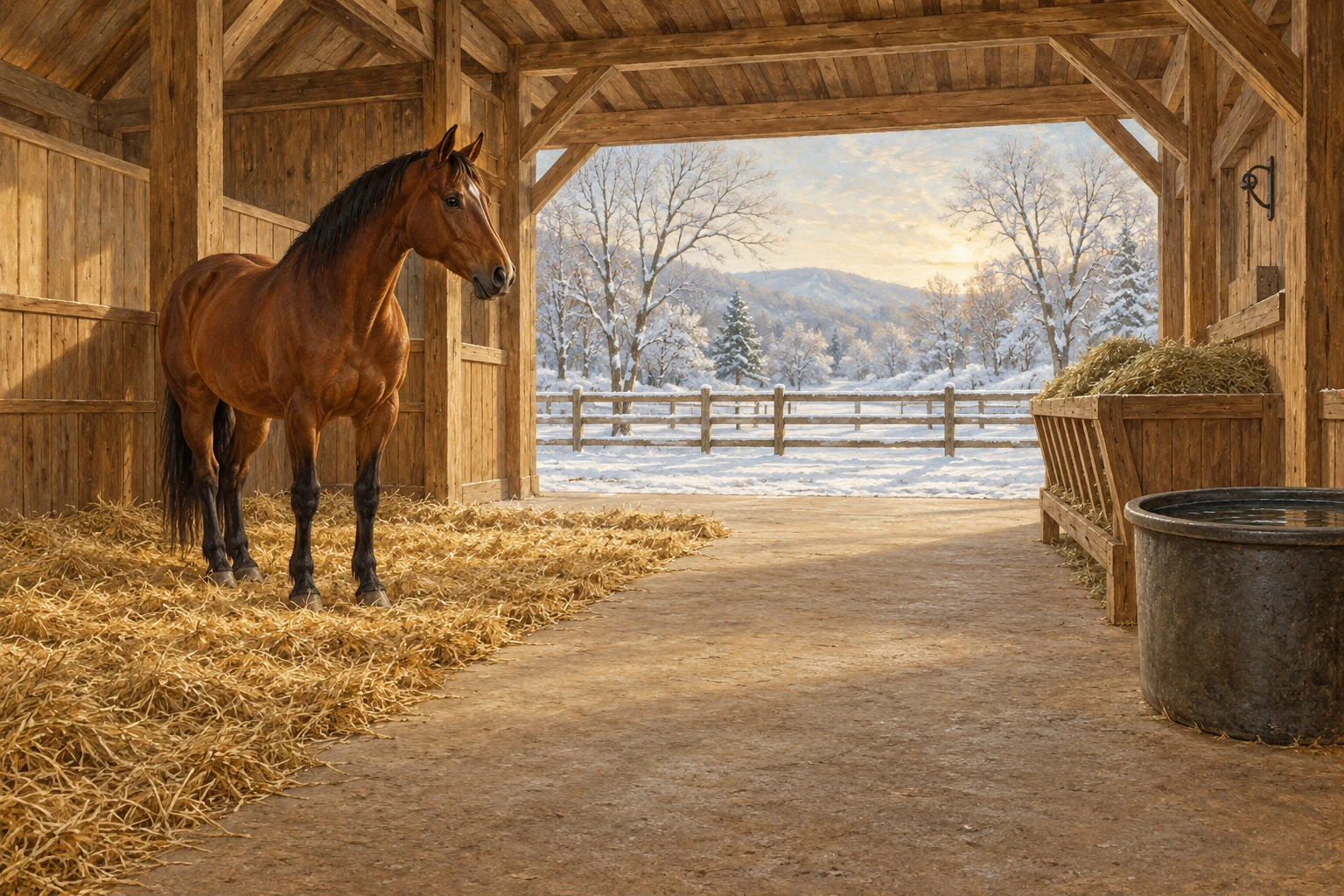
I would look beyond the half hour you spend at the stable yourself. What happens during the rest of the day? Can your horse move comfortably, or does it spend a lot of time standing? Does it have to pass through a tight corner to reach the hay? Questions like these offer a useful starting point for practical planning.
For older horses, the University of Minnesota recommends, among other things, light daily exercise or exercise and sufficient time to warm up and cool down. This is not a training plan for an acute attack. It is an orientation for an individually tailored everyday life. [2]
I wouldn't promise you a fixed number of minutes here. It is more helpful to agree: What is my horse currently allowed to do? How do I recognize excessive demands? And what do we do if the place is frozen? With these answers you can also better organize a full working day.
Bill: decide for yourself again where the steps go
An example from our environment is Bill, our friend Jenny's horse. We have already written about Jenny and her book “groundwork in a modular system” here. Bill moved from the box to an open stable because of his osteoarthritis. There was a very specific wish behind this: he should be given more opportunity to move freely.
On large pastures he can now decide for himself when to go, where to graze and when to stop again. This movement occurs between shared units. Nobody has to constantly guide or guide him. It is precisely this difference that is important to me: We can move a horse - and we can enable him to have an everyday life in which he moves himself.
After the move, we observed that Bill's arthritis-related symptoms improved significantly. This does not mean that the osteoarthritis has disappeared or that every open stable is suitable for every horse. It's our experience with Bill. For me, it shows very clearly why, when it comes to joint problems, we should also look at the many hours in which no one is standing next to the horse.
Sometimes an important change lies in allowing the horse to take more steps on its own again.
The route to the water is part of the winter plan
Ice surfaces, frozen bumps and snow that accumulates in the hoof make safe movement difficult. The University of Minnesota recommends avoiding icy areas and checking hooves regularly, even in winter. Paths to food, water and shelter should remain accessible. [3]
Think about your horse's everyday life: from the resting place to the water, on to the rack and back again. Where does it have to move? Where does crowding occur? Where would you hate to walk even if it was slippery? This is not a complicated exercise. But sometimes it shows a place that you have previously overlooked.
A dry, protected area and accessible, non-frozen drinking water are also part of the winter supply. Whether a blanket is necessary depends, among other things, on fur, shearing, body condition and weather. It is not a substitute for treating a painful joint. [3]
I would keep the agreements in the stable as specific as possible. Who reports an icy spot? What alternative is there on this day? Who will be notified if the horse is running unusually cautiously? A small shared plan often helps more than a large list of good resolutions.
Feeding: suitable for the horse and the exercise
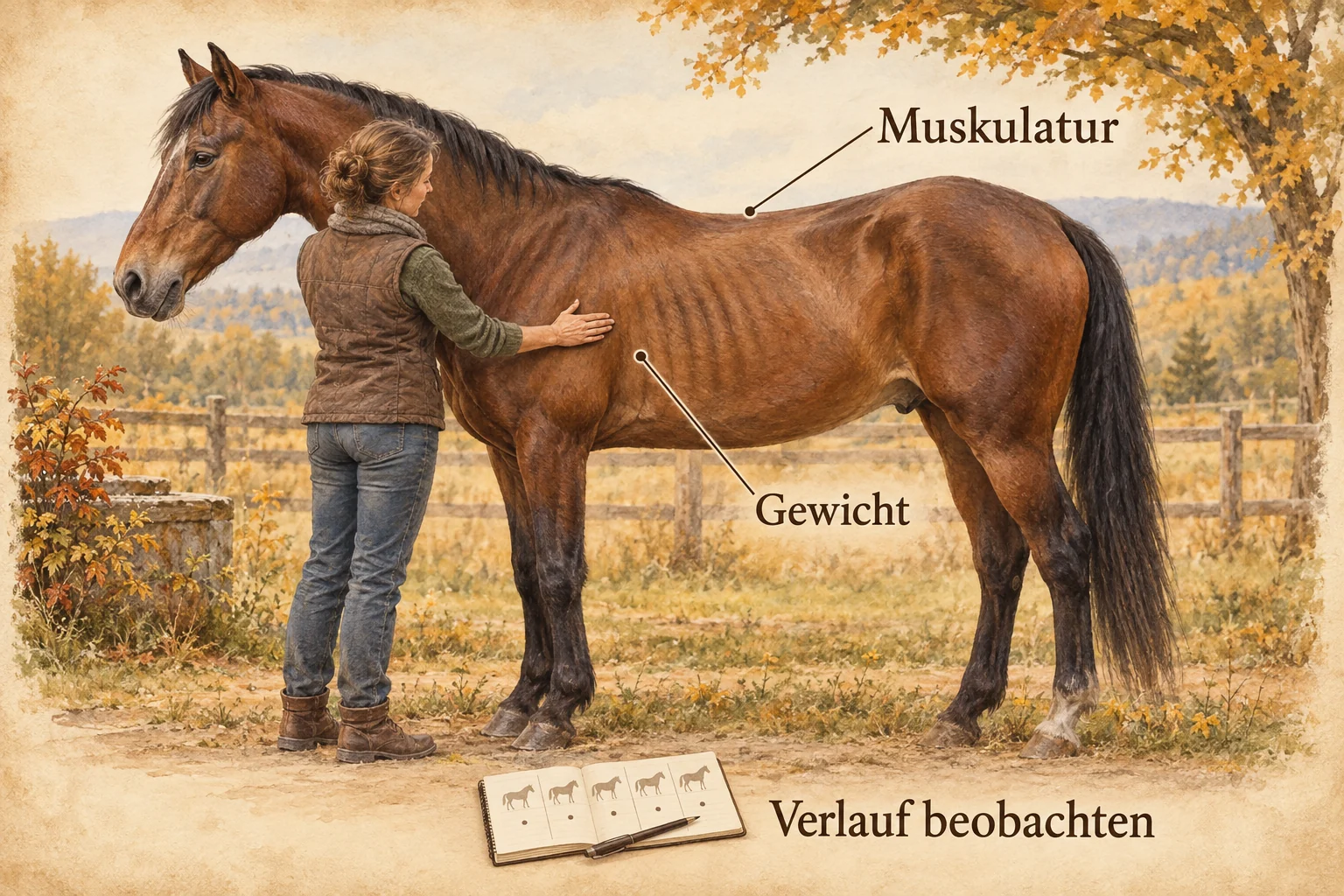
Winter does not automatically mean that every horse needs more concentrated feed. The energy requirement depends, among other things, on work, body condition and exposure to cold. At the same time, movement can decrease. That's why it's worth taking a look under the winter coat: How do the weight and topline develop? [3, 4]
Obesity should be taken into account when managing osteoarthritis. It also doesn't help if a horse loses weight unnoticed. Adequate care and appropriate body condition are part of the overall plan. Feed changes should be based on the actual ration. [2, 4]
For our discussion, I would put everything together: roughage, pasture time, concentrated feed, mineral feed and all supplements, preferably in quantities. Especially when multiple products are fed, it quickly becomes confusing to see what is already covered. Creating this overview is a sensible start for me.
Why this topic affects us personally
When Marc talks about osteoarthritis, he's not just talking about a topic from a specialist book. He himself has osteoarthritis in both shoulders. There was a time when he couldn't even open or close a drawer without experiencing severe pain. It was hardly possible to raise my arms far above my head. Things that you wouldn't normally think about suddenly became a painful hurdle.
Since he has been specifically paying attention to his omega-3 supply, he describes his change as follows: "My pain has disappeared by 98 percent. I can move normally again and live my everyday life without these constant restrictions." He now even lifts his saddle truck, which weighs around 15 kilograms, over his head and onto his Bundeswehr locker without any help - without any pain, according to his own statement.
For him, this means a big part of his quality of life. It's about the freedom to do something without waiting for the pain first. That's exactly why this topic is so important to us. If you have experienced for yourself how much everyday life can change with less pain, you will also want to look for options for your animals that will make their lives easier.
Based on this experience, we are convinced that it is worth taking a closer look at the care of every horse with osteoarthritis. Is there anything there that we can meaningfully improve? If targeted omega-3 supplementation suits the horse and its treatment plan, we believe it is worth trying to include it and see if well-being and mobility improve. We can't promise an improvement - but we think this possibility deserves attention.
And what place can Omega-3 have?
I think the question is legitimate. There are studies on horses that look at omega-3 and joint-related inflammatory processes. In a small study of arthritic horses, certain inflammatory markers changed more favorably with omega-3 supplementation than in the control group. This is an interesting approach, but there is no evidence that any oil reliably eliminates osteoarthritis pain or rebuilds cartilage. [5]
The remaining research helps to classify the possibilities and limitations more specifically: In a study with young horses in training, not all joint markers examined were influenced by the supplement. Young training horses are also not the same as older horses with clinical osteoarthritis. [6]
That's why I would consider Omega-3 as a possible nutritional supplement. We look at the composition, the fatty acids actually contained, the suitability of the entire recipe for the horse and the rest of the ration. “An oil is an oil” doesn’t help much with this decision. An individual amount belongs in a personal conversation and may have to be coordinated with the treating practice.
What a fatty acid profile can contribute
If we specifically talk about fatty acid supply, appropriate blood values can provide additional information. A study in 50 healthy horses showed that EPA and DHA levels in whole blood changed after appropriate supplementation. The nutrient status in the blood was examined, not the treatment of winter symptoms. [7]
A fatty acid profile does not diagnose osteoarthritis or measure how painful a joint is. However, it can help to look at the initial situation and later use a comparable procedure to see how the care has developed. The blood is taken by the veterinarian; The classification requires horse-friendly standards. Human target values are not simply adopted.
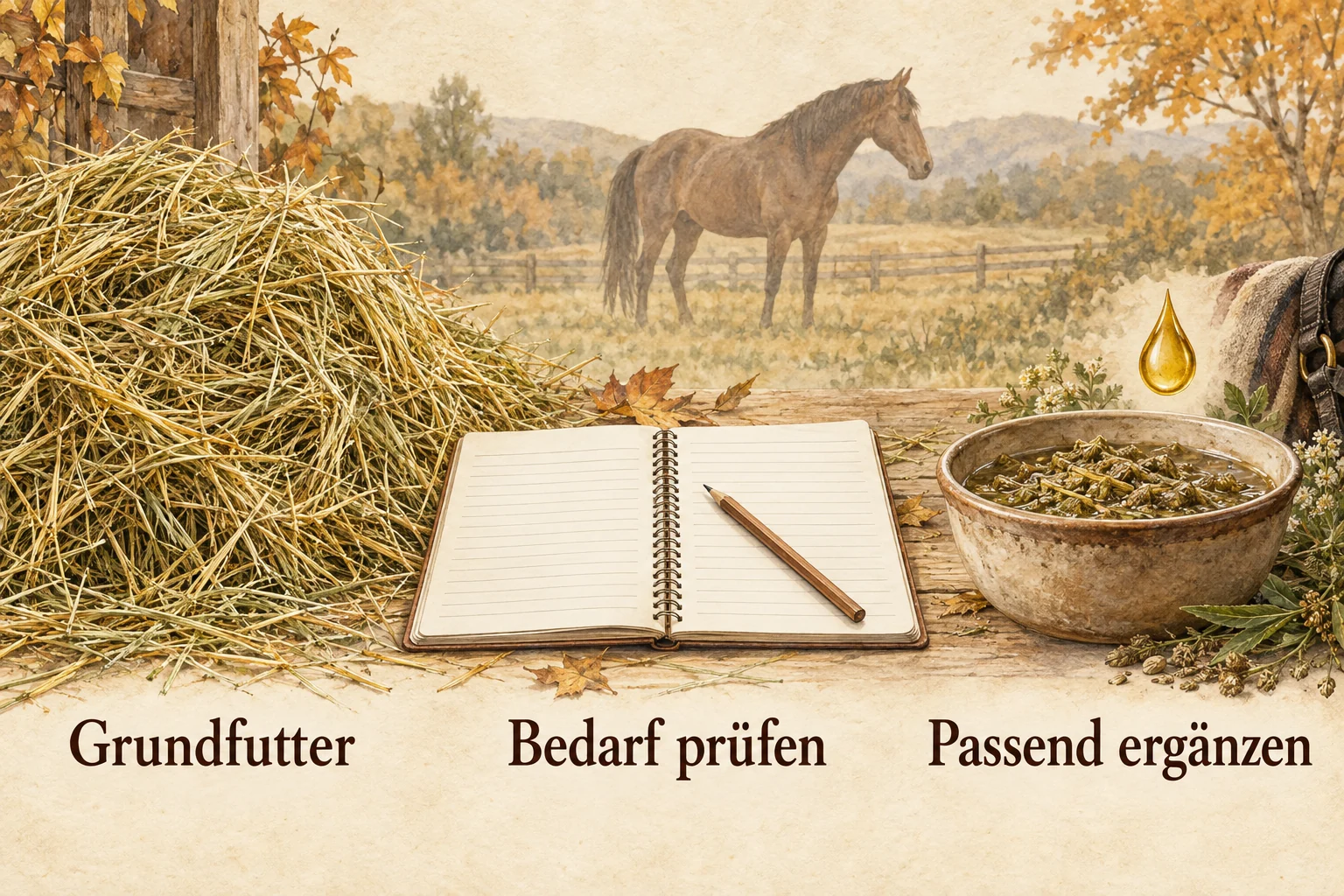
Exercise, husbandry, treatment and feeding should all go together. An addition has a comprehensible place in it.
A winter plan that fits into your everyday life
You don't need a perfect stable or ten new products. I would start with a few questions: Is the current movement aligned with the treatment practice? Are the paths safe? Is the feeding correct? And do we capture change enough to talk about it?
Short notes are enough to get you started. How were the first steps? Was there longer standing time or a different floor? What was changed? A history is more helpful than remembering a single good or bad day. Please do not change medication yourself because it looks better in between.
If you would like a clearer overview for your horse, write to Marc and me. Tell us about your everyday winter routine, what you've been feeding so far and the joint problems that have already been clarified. Together we can see where our support makes sense and whether a closer look at the fatty acid supply is part of it. So that you are not alone with your questions between the stable aisle and the feed shelf.
Sources and further literature
-
Merck Veterinary Manual: Joint Disorders in Horses – joint diseases and individual treatment.
-
University of Minnesota Extension: Caring for your senior horse – osteoarthritis management, body condition and appropriate exercise.
https://extension.umn.edu/agriculture/animals-and-livestock/horse/caring-for-your-senior-horse
-
University of Minnesota Extension: Caring for your horse in the winter – safe floors, hooves, water and weather protection.
-
Merck Veterinary Manual: Nutritional Requirements of Horses and Other Equids – Feeding as needed.
-
Manhart et al. (2009): Markers of Inflammation in Arthritic Horses Fed Omega-3 Fatty Acids – small study on inflammatory markers, no general proof of effectiveness for oils.
https://www.sciencedirect.com/science/article/pii/S1080744615307026
-
Leatherwood et al. (2018): Effect of n-3 polyunsaturated fatty acids on markers of inflammation in young horses in training - not all markers examined changed.
https://www.sciencedirect.com/science/article/pii/S1080744618300494
-
Pearson et al. (2022): Dose-Dependent Increase in Whole Blood Omega-3 Fatty Acid Concentration in Horses Receiving a Marine-Based Fatty-Acid Supplement – a measurement study in healthy horses.
This article complements veterinary care and does not replace examination or treatment. Movement and stress must match the findings.
Studies on inflammatory markers and blood values are no guarantee of freedom from pain or cartilage development. A consultation can include paid analyzes and supplements.
All images are AI-generated illustrations. They illustrate the topics and do not show documented treatment results.
For stables, clubs and practices
Free introductory talk at your location (German)
Understanding equine health. Making a difference together.
Do you run a riding stable, are you involved in a riding club or work in a veterinary practice, in animal physiotherapy or animal osteopathy? And would you like to give your adjusters, members, customers or your team understandable health knowledge?
Then bring us to you for a free introductory talk (German). We talk about feeding, fiber, intestinal health, obesity and the role of exercise - with reference to everyday stable life and space for your questions. We will coordinate the topic, scope and date together.
Select “Free introductory talk (German) for stable, club or practice” in the form and write to us where you are and who you would like to reach.
What would you like to think about with us?
Would you like to consciously accompany your horse with osteoarthritis when feeding and caring for it? Write to Marc and me what has already been clarified and what questions are open. Together we will see whether advice or a fatty acid profile suits your situation.
Contact: marc@probalance24.com · Write to us via our contact page.
If you would like to know which products we use, please take a look here in the ProBalance shop .
Would you like to find out more about the topic and also read the scientific evidence and studies on this article? Click here.