

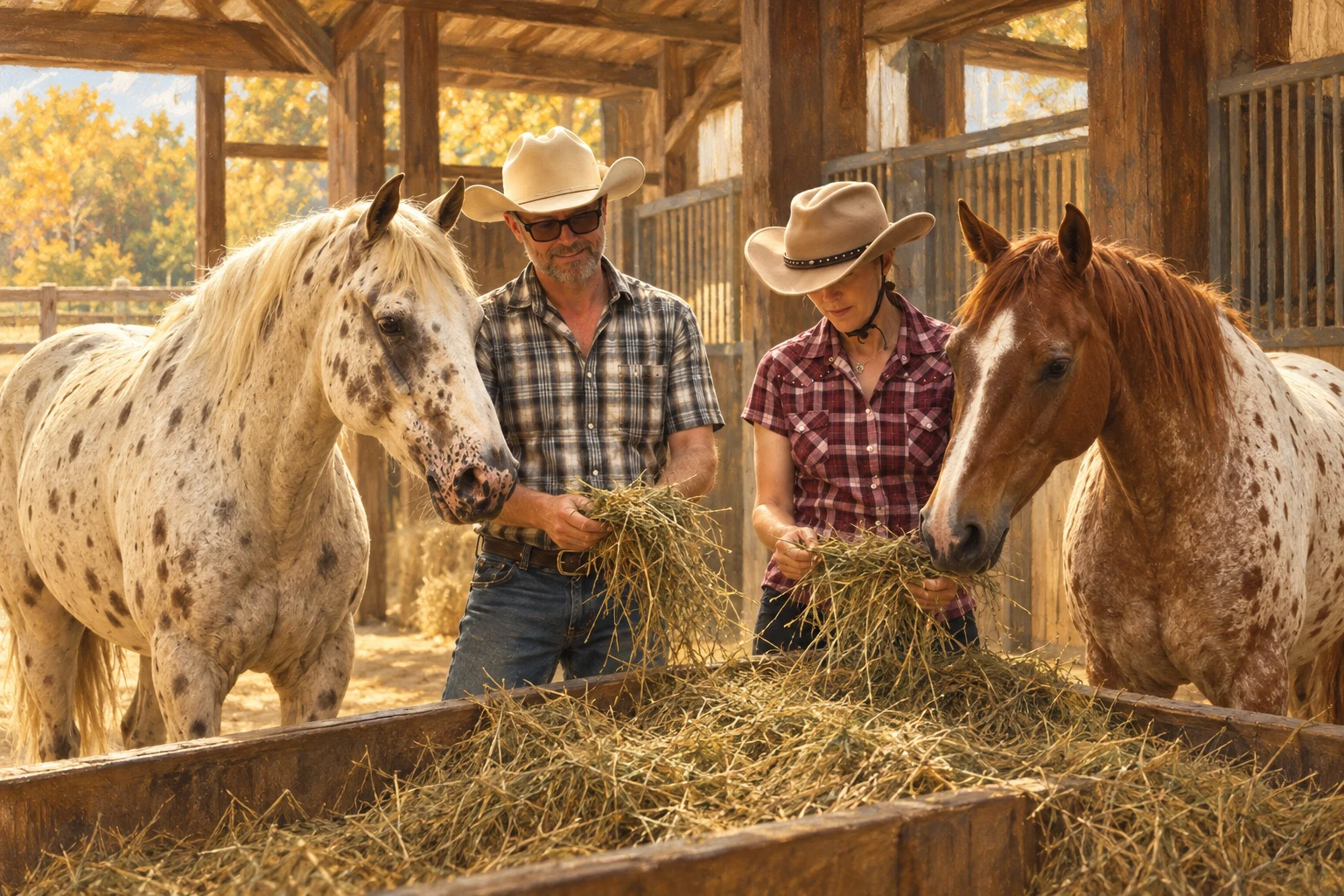
After antibiotics: What does your horse's gut need now?
Once treatment is over, questions about feeding often remain. How to accompany your horse sensibly and when fiber can play a role.
The treatment is done. Your horse seems livelier again and you are initially relieved. Then you stand at the feeding trough and ask yourself: Should I do something for the intestines after the antibiotics? Almost everyone at the stable has a tip. A powder here, a treatment there. You want to help. But where do you start?
Our horses have had problems with the stool consistency and free fecal water for years. Sandra and I therefore know how much this concerns us in everyday stable life. You look, try things out and hope that peace will finally return. We are incredibly happy that we found a solution for our horses.
That's exactly what this is about: understanding what can happen in the intestines and deriving a sensible next step for feeding from this.
The treatment is over. The intestines still continue to run.
Antibiotics may be necessary for bacterial diseases. At the same time, they can change the community of microorganisms in the intestine. The extent to which this happens depends, among other things, on the active ingredient used. This does not mean that every horse treated will subsequently have digestive problems. [1]
A study of six healthy ponies makes the difference clear: after a certain antibiotic, the composition of the intestinal microorganisms changed. After discontinuation, it returned to its original state and individual differences remained measurable for a longer period of time. The ponies remained clinically healthy. A changed microbiome does not automatically mean a sick horse. [1]
What I take away from this for everyday life in the stable is that it's worth staying attentive. But we don't have to panic or change everything as a precaution. The prescribed treatment remains in the hands of the veterinarian.
You can accompany your horse in a meaningful way. The first step is to take a close look at what it's already getting.
Why roughage has so much to do with the topic now
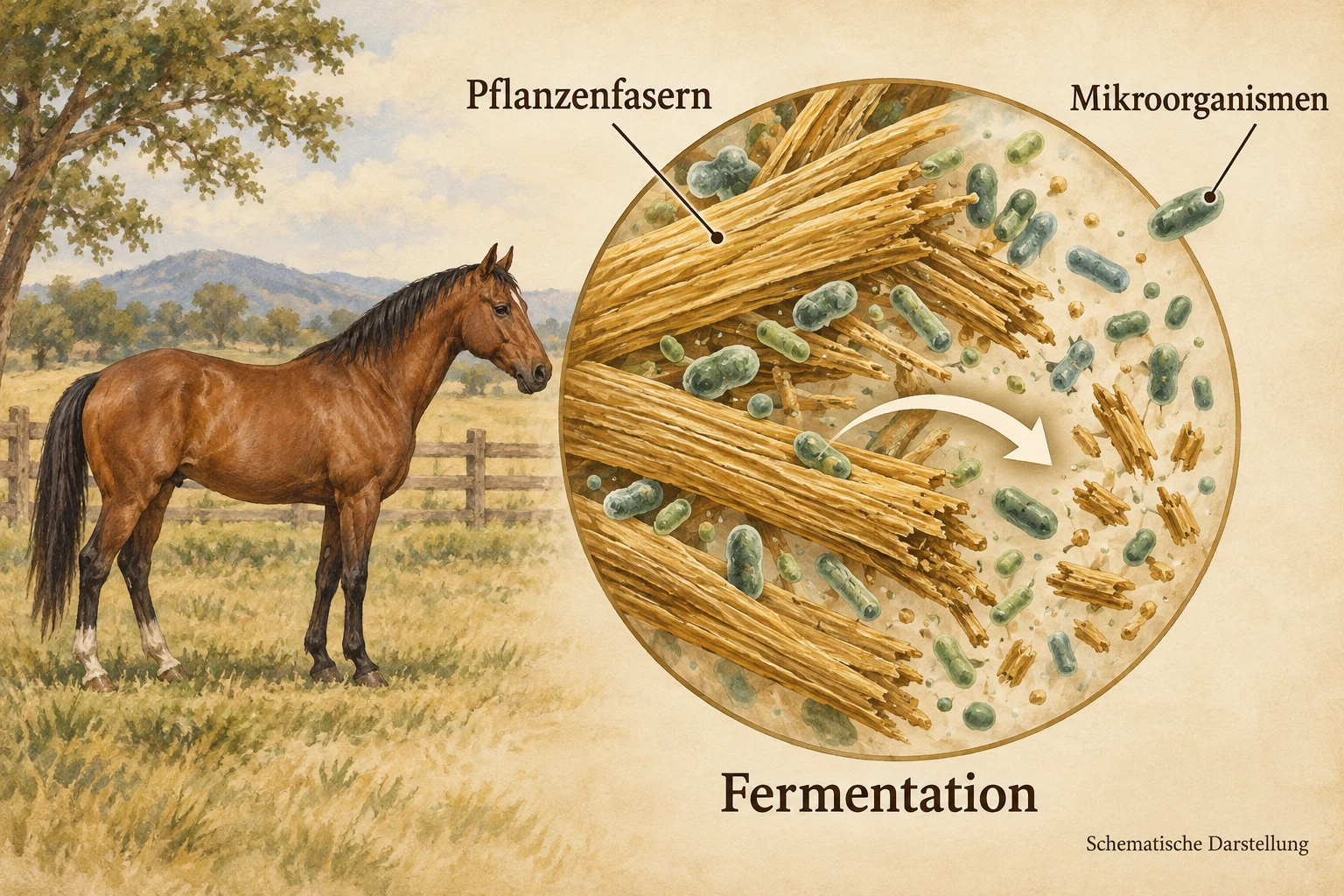
Microorganisms in the appendix and large intestine work to utilize plant fibers. This fermentation produces, among other things, short-chain fatty acids that provide the horse with energy. That's why roughage is so much more than something that fills the feeding trough. It is part of the basis of his diet. [2]
So look at the simple things first: Does your horse eat his usual roughage? Is it possible to do this undisturbed? Is the quality good? Is clean water available? The amount must match his needs and, if necessary, the specifications of the treating practice. [2]
Imagine a horse returning to its everyday life after treatment. Because everyone means well, he gets a new mash, a different mineral feed and two supplements at the same time. A few days later the stool looks different. Now no one knows which change is connected to what. This is a made-up example – but the decision behind it is easy to understand.
It will be clearer if you first record what your horse actually eats and plan changes specifically. Feed changes should generally be done gradually; In the case of a sick horse, the practice's individual instructions apply. [3]
The intestines also need movement
There is more to a healthy horse's intestines than just the right food: regular exercise is an important component. When your horse calmly walks through the run, runs to the hay or moves with his peers, it is part of everyday life that also supports his digestion. Studies show that horses kept in stables have lower colon activity than those kept on pasture. Movement, feeding and husbandry work together. [6]
Especially after an illness, the treating veterinarian will decide with you what exercise is permitted and sensible and how much of it your horse can tolerate. Maybe short guided paths are possible at first, maybe it can move around freely again. An ordered pit rest remains binding. It is important to me that we plan the appropriate exercise just as consciously as we plan the food.
Fiber: What it can contribute
When we talk about intestinal support, we quickly end up with fiber. This refers to different plant fibers. Their properties differ: some are well fermented by microorganisms, others less so. Therefore, “contains fiber” alone is not a sufficient description of a supplement. [2, 4]
A mixture of plant fiber sources is now part of our diet. We have had very good experiences with the stool consistency and free fecal water with our horses. If you are interested in what solution we found for Spirit and Valea, please contact Sandra and me. We'll tell you about it and see together what might suit your horse.
For a horse after treatment, we would therefore take a specific look: What fibers did his previous ration provide? What else should a supplement contribute? Is its composition suitable for this horse and how can it be introduced in a compatible manner? An addition may have a place in the plan. It does not replace the roughage supply.
Prebiotics and probiotics: two different ideas
The names sound similar. But there are different approaches behind this. Probiotics contain live microorganisms that, in appropriate amounts, are said to have health benefits. Prebiotics are components that are used by certain microorganisms and are said to provide health benefits. Not every fiber is automatically a proven prebiotic. Synbiotics combine corresponding approaches. [4]
The most important thing for you is: A fiber mixture is not the same as a product with live bacteria. And results from a particular mixture cannot simply be extrapolated to all others. In a horse study on a synbiotic supplement with antibiotics, changes in individual bacterial groups were found. This does not provide general evidence that any intestinal preparation prevents symptoms or restores the intestines. [4]
I would therefore look less for the most impressive term on the packaging and ask more about what exactly is contained and why it should fit the current situation. You can ask these questions. You don't have to be a microbiologist for this.
A small plan makes a lot of things easier
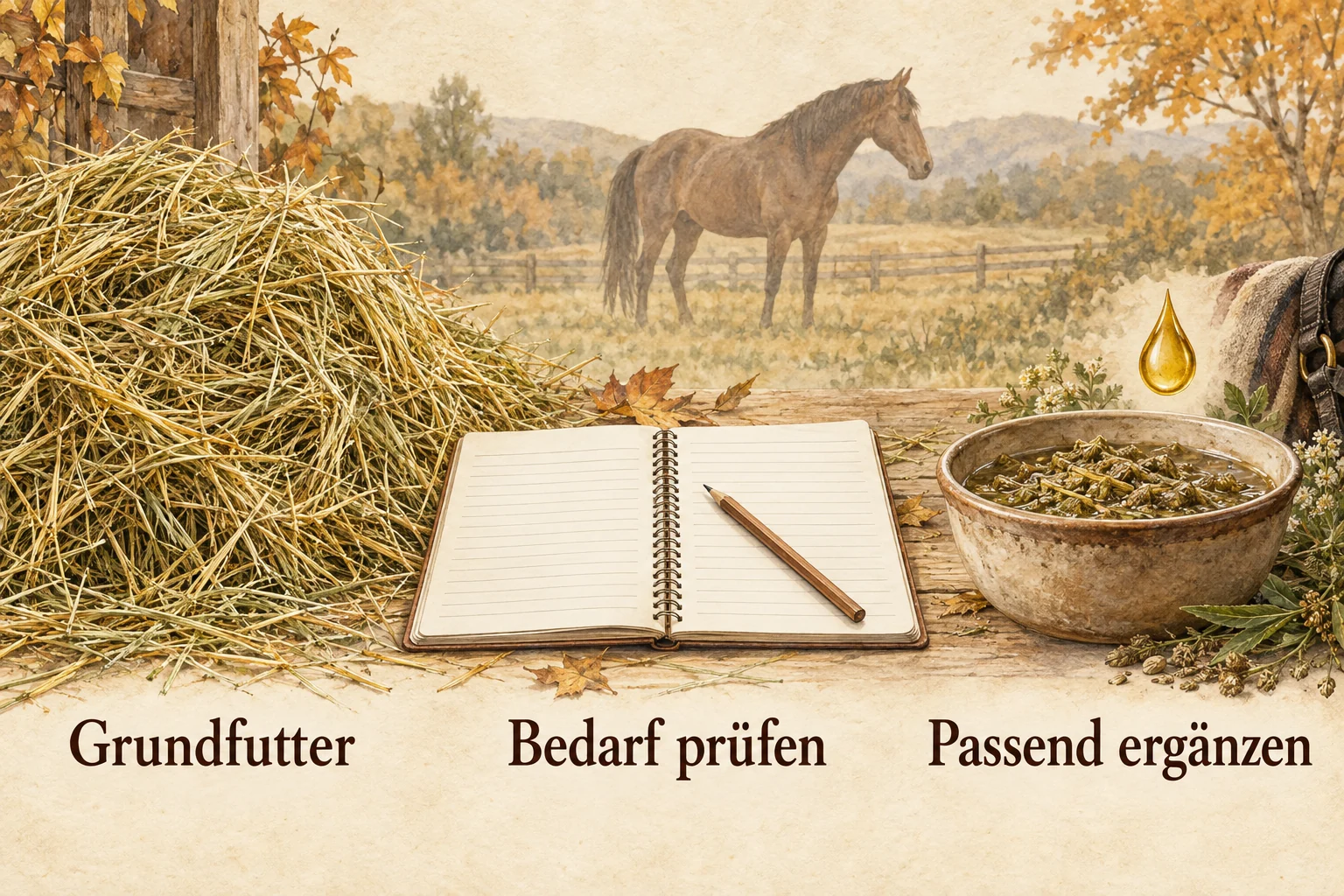
You don't need a complicated table. A short note in your cell phone is enough to get you started: What does your horse get? What quantities are they? When was something changed? How are appetite and stool? What requirements has the practice set? This turns a general gut feeling into a process that you can discuss together.
Don't set out to evaluate every horse apple. It's about recurring changes and whether your horse is coping well overall. When you choose a supplement, determine how you will evaluate its benefits and when you will discuss it again. This way the decision remains understandable.
The helpful question is: What does this horse need right now - and how do we know whether our plan is right?
When you should seek advice rather than simply try another feed
If you have diarrhea, signs of colic, fever, significantly reduced appetite or a noticeably weak horse, you should contact the treating practice immediately. Serious intestinal problems can occur, especially during or after antibiotics. Then it's about clarification and treatment, not about another attempt at feeding. [5]
For me, that's part of good support: knowing which questions we can clarify together about the feeding plan and when medical help is needed.
You don't have to work through all the recommendations alone
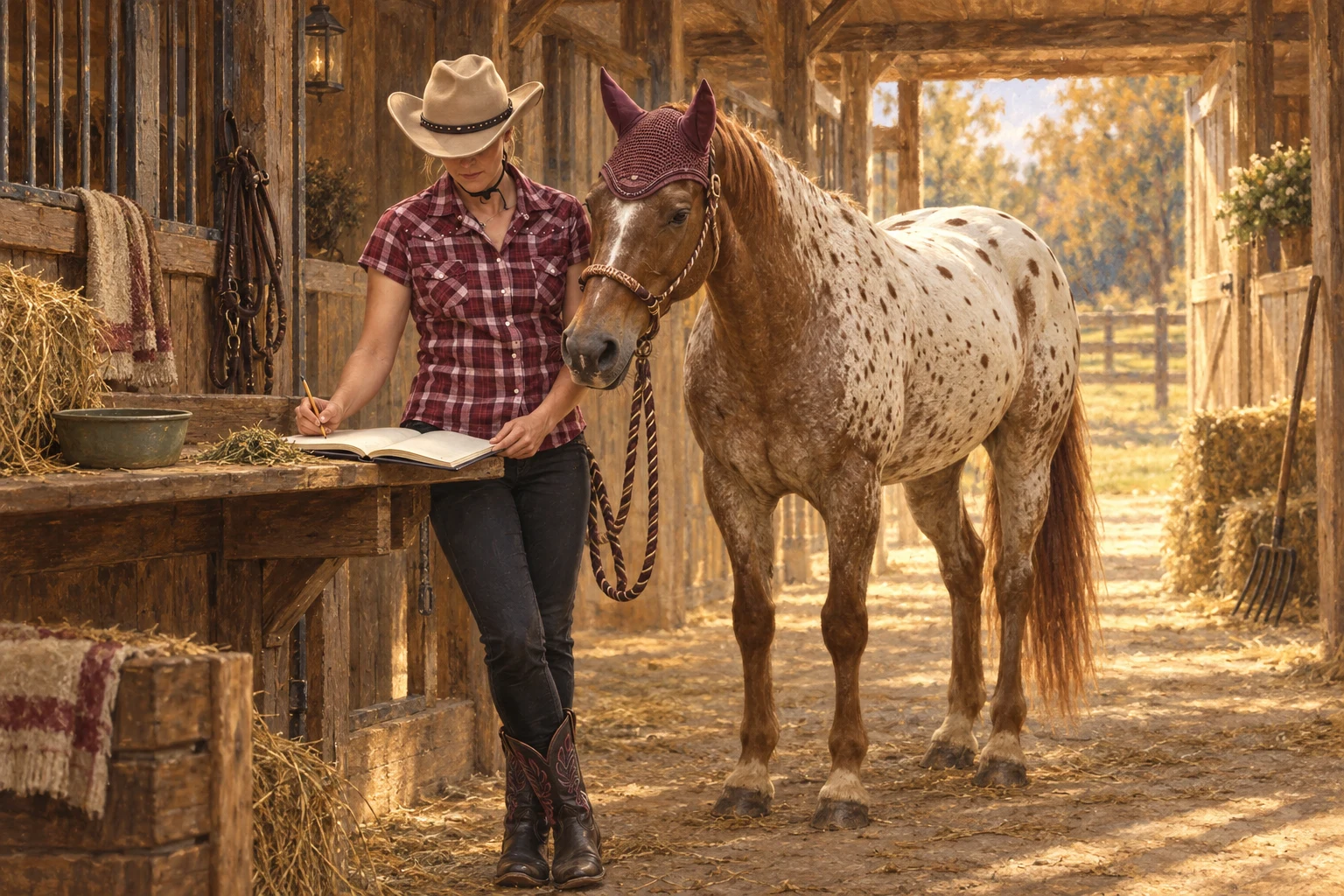
After an illness, you often want to do a lot right. I can understand that well. You are happy that things are progressing and you want to give your horse something that will help him. This wish can become a calm, well-thought-out plan.
Sandra and I will look at your previous feeding, your observations and the recommendations of the treating practice. We discuss whether a suitable fiber supplement might make sense and what information we need. A fatty acid test is not an examination of the intestinal flora and does not automatically become part of this plan.
Write to us about what concerns you using the contact form. For the first message, your question and a brief overview of feeding are sufficient. Then we'll think together about what the next sensible step might look like for your horse.
Read more and deepen
Gut health: Our experiences with Spirit and Valea
Read the ProBalance article
Coat change: think about bowel movements and feeding
Read the ProBalance article
Good blood results. A well-nourished horse?
Read the ProBalance article
Sources and further literature
-
Theelen et al. (2023): Longitudinal study of the short- and long-term effects of hospitalization and oral trimethoprim-sulfadiazine administration on the equine faecal microbiome and resistome. Small longitudinal study on six healthy ponies.
-
University of Minnesota Extension: Horse nutrition. Basics of roughage, water and individual care.
-
Extension Horses: Changing the Diet of Horses. Gradual changes to the diet.
-
Lagounova et al. (2023): The Effect of Dietary Synbiotics in Actively Racing Standardbred Horses Receiving Trimethoprim/Sulfadiazine. A study of a specific synbiotic mixture, not a general product recommendation.
-
AAEP: Clostridial Enterocolitis Disease in Adult Horses Guidelines. Veterinary guidance on possible serious intestinal disease.
-
Williams et al. (2011): Investigation of the effect of pasture and stability management on large intestinal motility in the horse, measured using transcutaneous ultrasonography. Comparison of colon activity in pasture and stable housing.
The article supports orientation on feeding. It is not a substitute for veterinary diagnosis or treatment. Medications will only be changed after consultation with the treating practice.
The studies examine specific antibiotics and individual supplements. This does not result in any proof of effectiveness for our fiber mixture after antibiotics.
The painting-like images are AI-generated illustrations. The fiber graphic is a simplified functional diagram.
For stables, clubs and practices
Free introductory talk at your location (German)
Understanding equine health. Making a difference together.
Do you run a riding stable, are you involved in a riding club or work in a veterinary practice, in animal physiotherapy or animal osteopathy? And would you like to give your adjusters, members, customers or your team understandable health knowledge?
Then bring us to you for a free introductory talk (German). We talk about feeding, fiber, intestinal health, obesity and the role of exercise - with reference to everyday stable life and space for your questions. We will coordinate the topic, scope and date together.
Select “Free introductory talk (German) for stable, club or practice” in the form and write to us where you are and who you would like to reach.
What would you like to think about with us?
Tell Sandra and me what questions you have about feeding your horse. Together we look at the previous ration and whether a suitable fiber supplement might make sense - coordinated with the treating practice.
Contact: marc@probalance24.com · Write to us via our contact page.
If you would like to know which products we use, please take a look here in the ProBalance shop .
Would you like to find out more about the topic and also read the scientific evidence and studies on this article? Click here.