

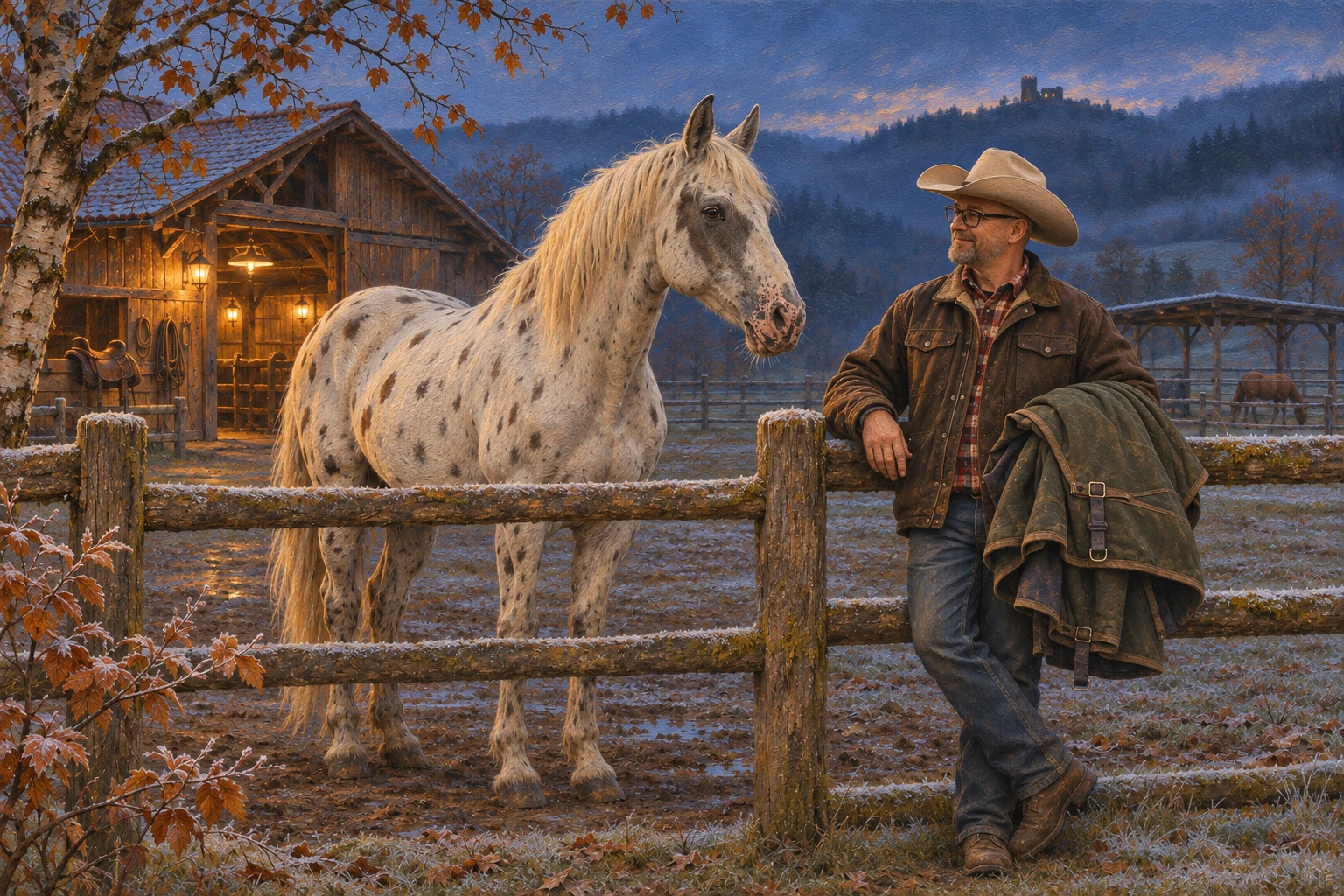
Blanket on or off? What your horse might say
Covering horses in winter: What the symbolic study shows us about their preferences and how you decide in wind, rain and cold.
Last lap at the stable. It's getting dark outside and wind and rain are forecast for the night. In the box next door you can already hear the question that comes up again and again this time of year: “So, what are you packing on today?” One takes the rain blanket. Someone else says: "I'll add 100 grams. How about you?" You look at your cell phone again and then at your horse. Do you even need a blanket tonight? And if so, how much?
I find the question behind it much more exciting than any number on the display: What would your horse choose if you could ask him? That's exactly what a Norwegian research team tried.
Three illustrations, three different meanings
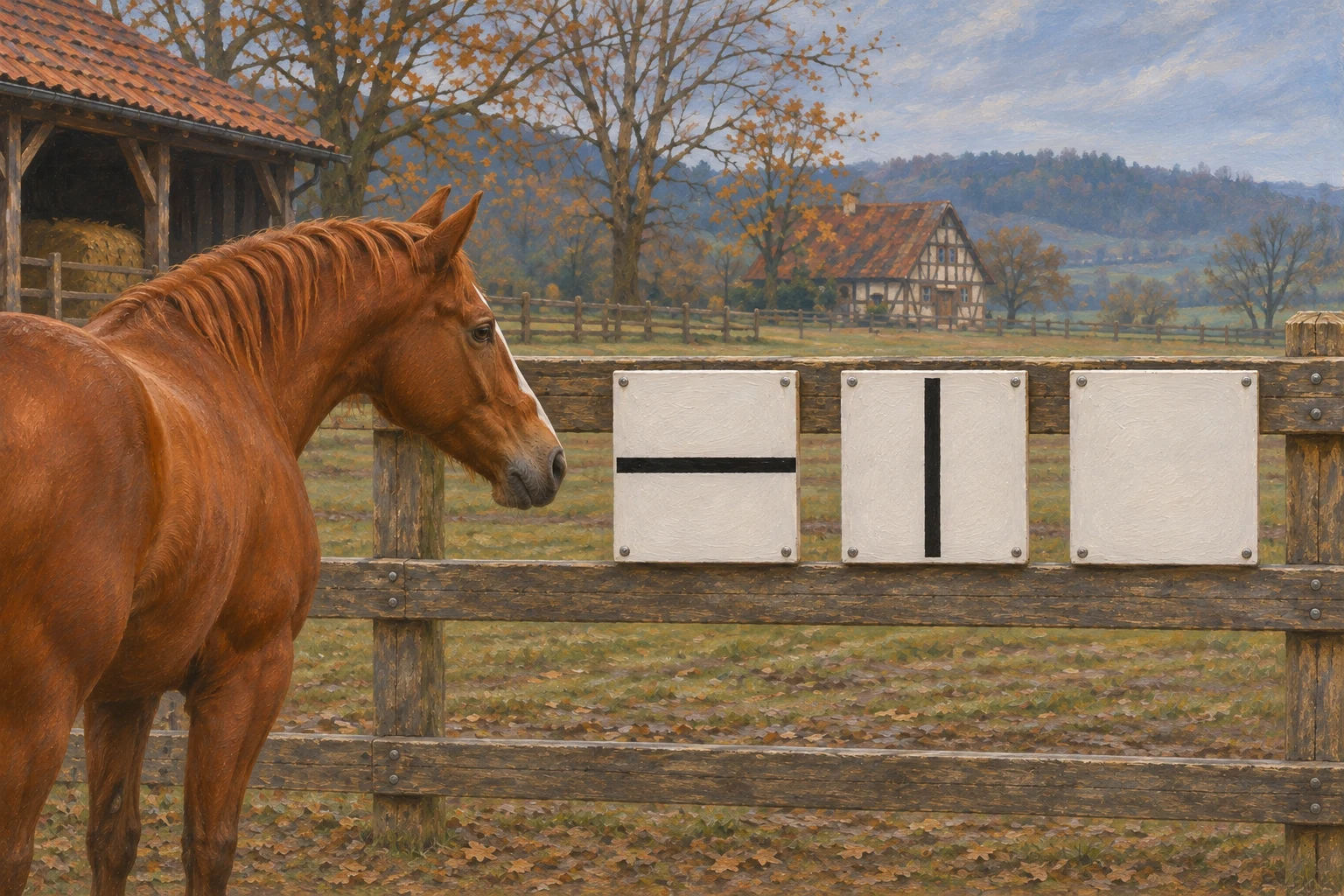
The researchers taught 23 horses to touch a blackboard with their noses. A horizontal line meant “cover it.” A vertical line stood for “ceiling down”. A blank slate meant “leave everything as it is.” The horses learned step by step what happened after being touched. Within 14 days of training, all 23 had learned the task. [1]
The three symbols at a glance: cover on, cover down and leave everything like that. For each individual election, the horse was shown two boards.
When it came to the actual election, there were two options. If the horse was already wearing a blanket, he could have it removed or keep it. If it was left without a blanket, it could get one or stay the same. The people implemented the choice. [1]
On a warm test day, all ten horses that were already blanketed wanted the blankets removed. In rain and temperatures between 5 and 9 °C, ten of twelve horses that went into the test without a blanket opted for a blanket. Two preferred to stay without. Later, in harsher conditions, these two also chose a blanket. [1]
Two horses can stand next to each other in the same rain and still make different decisions. That's exactly what I find so beautiful about the experiment.
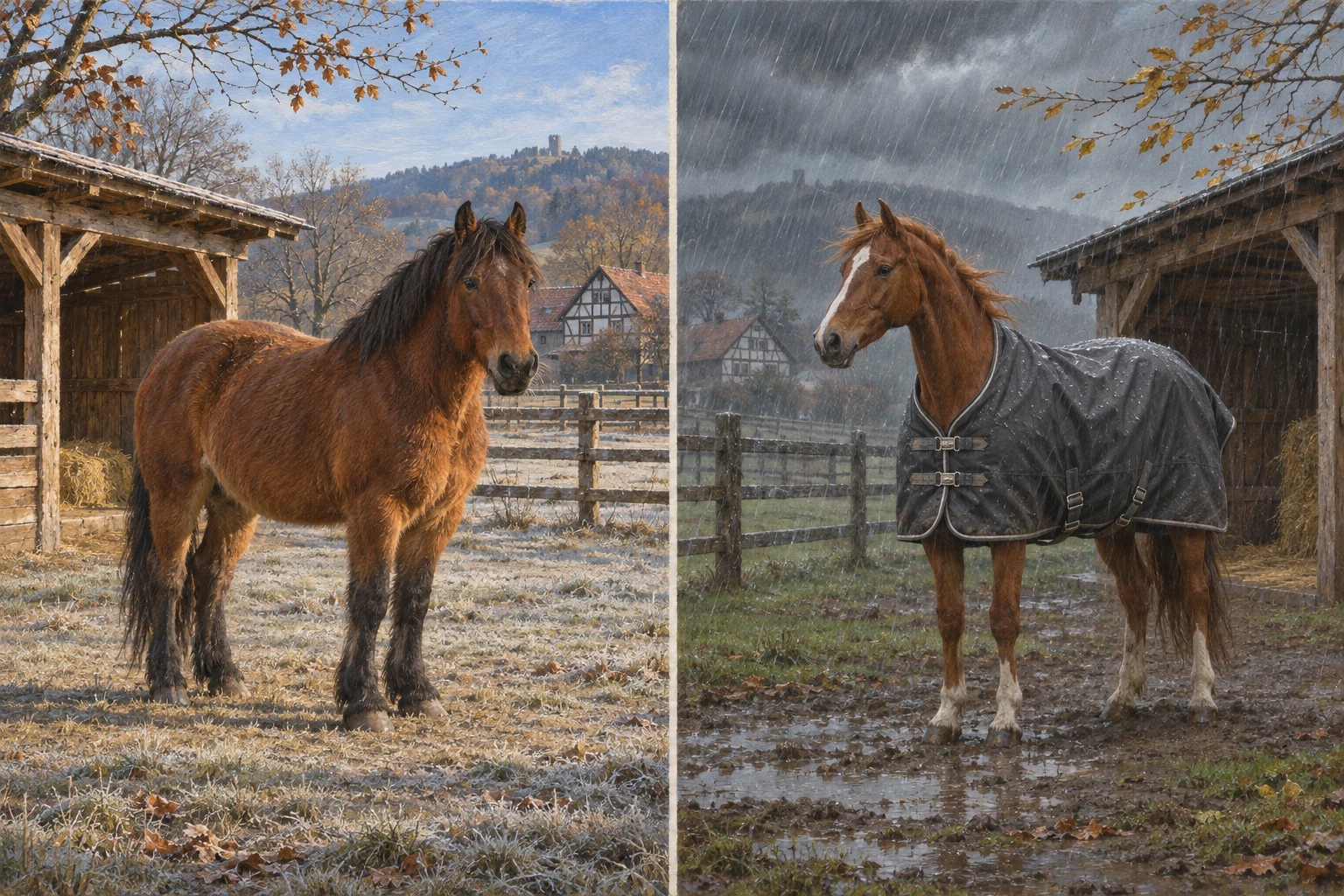
Five degrees in the sunshine feels different than five degrees in the rain
In a further analysis using the symbol method, the researchers took a closer look. Temperature, wind, precipitation and solar radiation were related to the choice. Even between 5 and 10 °C, a blanket was much more likely to be chosen in the event of rain or strong wind. [2]
Imagine a dry morning. The sun comes out, your horse has a thick winter coat and can stand behind the shelter. Now imagine the same temperature in the afternoon. The wind is changing, it has been raining for hours and the windbreak is on the wrong side. The thermometer still shows the same number. The day has long since changed for your horse.
Winter fur keeps the body warm through trapped air. Wind and moisture can weaken this protection. A dry, accessible shelter gives the horse the opportunity to get out of the weather on his own. Take a look and see whether your horse can actually use the space when the others are already there. [3, 4]
Wind, rain and sun change the situation even at the same temperature.
At what temperature should I cover my horse?
I would start with three questions. What is the weather like where the horse is actually standing? How much protection does it bring? And how is it coping with the conditions? A healthy horse, accustomed to the cold, with a thick, dry winter coat and a good place to shelter, can often get by without a blanket. Depending on the extent of the shearing, some of the natural insulation is missing. Even little winter fur, poor body condition or illness can change how much protection a horse needs. [3, 4]
Age alone does not decide the question either. A sprightly senior with a good winter coat may cope differently than a horse of the same age who has lost weight in the last few weeks. Especially if you have thick fur, it's worth regularly feeling your ribs and back and keeping an eye on the condition of your body as it progresses. If an older horse suddenly weighs less or noticeably loses weight, the cause needs to be clarified. [4]
When I do the evening round, I also look at the hours after I drive home. Will the rain stay overnight? Can my horse avoid the wind? And if it clears up tomorrow morning and the sun comes out, who can look at the ceiling? The lowest number in the weather app answers none of these questions.
How many grams does my horse need?
The gram measurement describes the weight of the filling per square meter. An unlined, waterproof rain cover can protect against wind and rain. A lined outdoor blanket provides additional insulation. How warm it actually gets underneath also depends on the material, fit and weather. Therefore, “100 grams” alone cannot be used to determine a reliable operating temperature. [3, 4]
First, think about what you want the blanket to do that night. Does the horse especially need protection from rain? Does it need additional warmth because it is shaved or has little protection of its own? Check back at the next stable round. What was fine on a wet, windy night may be too warm the next morning when the sun is shining.
A quick check on the horse will tell you more than a look at your cell phone
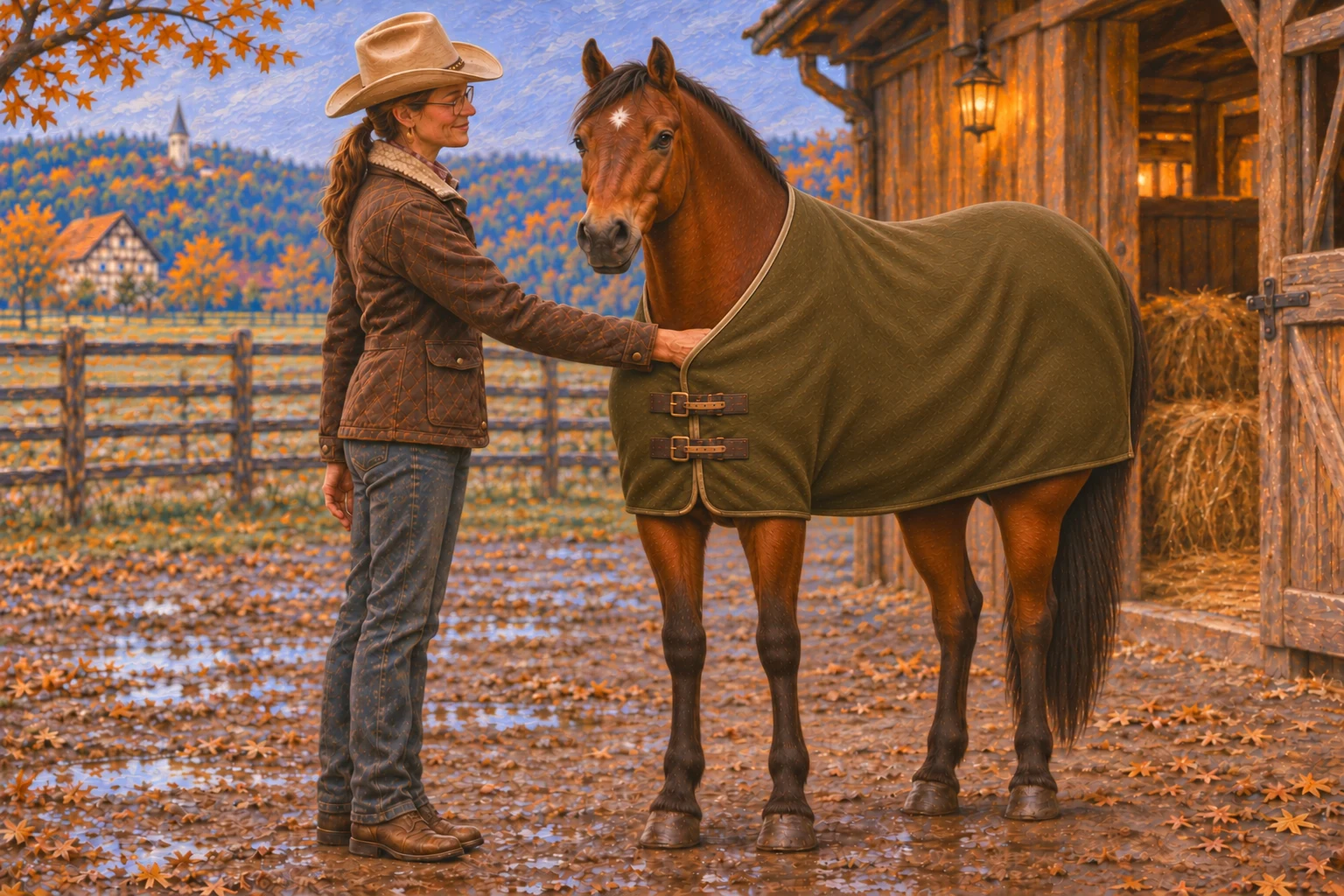
Sandra reaches under the blanket from the front of Virginia's neckline and feels her covered shoulder.
Slide your flat hand under the blanket and feel at the top of the back, directly behind the withers. The fur should feel pleasantly warm and dry. If it is noticeably hot or damp from sweating, check whether the blanket is too warm for the current conditions. If it's wet inside, check to see if any water has gotten in. When losing weight, it's worth taking a look at the shoulders and withers. Do you see any chafing? Can your horse move his shoulder freely when walking? [4, 6]
A wet horse that is constantly shaking needs immediate protection and a closer look. If the trembling continues despite protection or if the horse appears weak or sick, call the veterinary practice. And a horse that gives way when the blanket is put on also deserves attention: fit, chafing and the situation when putting on the blanket are good starting points. In the experiment, the horses had a learned opportunity to specifically communicate their choice. [1, 4]
Check the weather before stocking up. Then look at the horse again.
What I take away from the study
You don't need symbol boards at the stable to give your horse more choice. An accessible shelter, freedom of movement and the ability to move between sheltered space and open space are a good start. If you stock up, you can make the decision again the next time the weather changes. And if you're surprised at how differently two horses react in the same stable, it's worth taking that seriously. [2, 3]
Maybe you have a horse in mind that makes you wonder every winter. Feel free to write to Sandra and me about how it is kept and what you observe in wind, rain or changing temperatures. If you would like to discuss the topic together in the stable or club, you can also request a introductory talk (German) using the form.
Read more and deepen
Osteoarthritis in horses in winter
Read the ProBalance article
If your older horse loses weight despite eating
Read the ProBalance article
Sources and further literature
-
Mejdell et al. (2016): 23 horses learned to communicate their choice of blanket using symbols. The study tested the learned choice under concrete conditions.
https://doi.org/10.1016/j.applanim.2016.07.014 -
Mejdell et al. (2019): Follow-up study on the connection between weather and choice of blanket. She looked at temperature, precipitation, wind and solar radiation.
https://www.sciencedirect.com/science/article/pii/S0168159118306361 -
Mejdell, Bøe and Jørgensen (2020): Expert overview of heat regulation, weather protection and the preferences of horses in cold weather.
https://www.sciencedirect.com/science/article/pii/S0168159120301593 -
University of Minnesota Extension: Practical advice on winter husbandry, stocking, fit and body condition.
https://extension.umn.edu/agriculture/animals-and-livestock/horse/caring-for-your-horse-in-the-winter -
FH Südwestfalen (2026–2027): Ongoing research project on a practical guide for individual ceiling management.
https://www.fh-swf.de/de/forschung___transfer_4/forschungsprojekte_1/forschungsprojekt_46.php -
British Horse Society: Practical recommendations for blanket selection and fit. For the heat check, the association recommends placing the hand under the blanket behind the withers.
https://www.bhs.org.uk/horse-care-and-welfare/health-care-management/seasonal-care/types-of-rugs-and-rugging-a-horse/
Free introductory talk at your location (German)
Accompany horses well in winter
Would you like to talk to your stable, club or practice team about when it makes sense to cover up and how you can decide together when the weather changes?
Then bring us to you for a free introductory talk (German). We talk about winter fur, husbandry and blanket decisions in everyday stable life. We take time to answer your questions. We will coordinate the topic, scope and date together.
Select the introductory talk (German) in the form and tell us briefly who you are planning it for.
How does your horse get through the winter?
Write to Sandra and me about how your horse is kept and what you observe in the winter. If you would like to discuss the topic together in your stable or club, you can request a introductory talk (German) here.
Please do not send emergencies or sensitive findings using the form.
Contact ProBalance: Contact ProBalance
If you would like to know which products we use, please take a look here in the ProBalance shop .
Would you like to find out more about the topic and also read the scientific evidence and studies on this article? Click here.