

Omega-3 and eye health: What really matters for dry eyes

Marc Timmerherm
The working day isn't over yet, but your eyes have apparently already had enough. They burn, feel tired, and when you read you always want to close your eyelids for a moment. Maybe you know this from the screen. Maybe you're also concerned with a completely different question: What can I actually do for my eyes through my diet?
When it comes to eye health, many people first think of the right glasses or eye drops. Quite rare in fatty acids. DHA, one of the long-chain omega-3 fatty acids, is particularly relevant for the normal function of our eyes. Things get exciting when this knowledge has to be turned into a practical decision: Do I need a supplement? Does it help against dry eyes? And what could a blood test contribute to this?
Why Omega-3 is important for the eyes
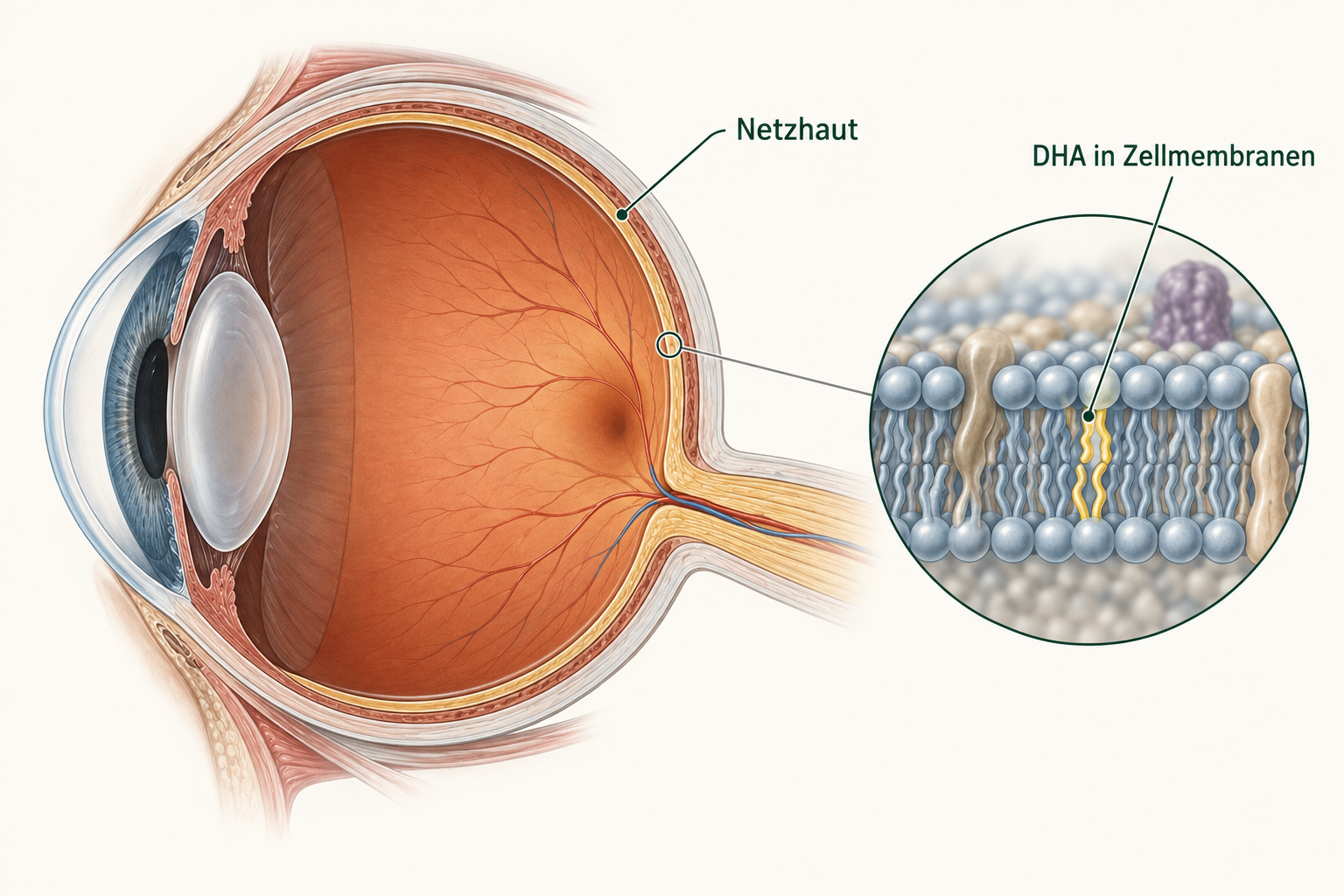
The retina is located in the back of the eye. There, light is picked up by specialized sensory cells and translated into signals that our brain processes. DHA is particularly well represented in the retina and is one of the building blocks of its cell membranes. The supply of fatty acids is therefore also an issue for this sensitive tissue. [1]
DHA's contribution to maintaining normal vision is scientifically recognized. The corresponding approved EU health claim states a daily intake of 250 milligrams of DHA as a condition for the positive effect. This is an indication of normal function, not a dosage instruction for the treatment of dry eyes or retinal disease. [2]
I find this distinction to be helpful. We can ensure an adequate supply of nutrients and at the same time remain realistic: a higher intake does not automatically turn a healthy eye into a better eye. And existing visual impairment cannot be attributed to an omega-3 deficiency.
Dry eyes: It's also about the tear film
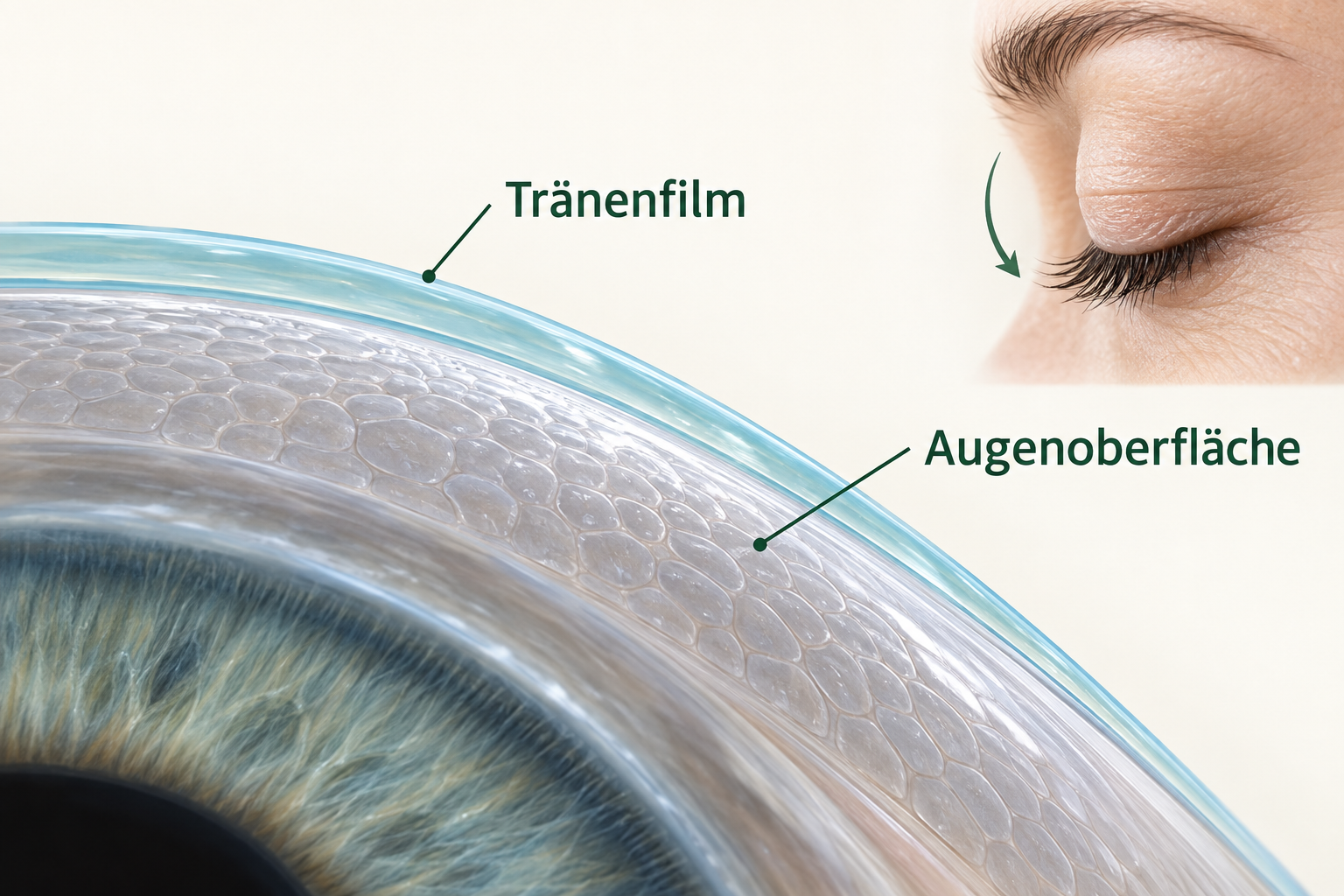
For comfortable vision, a lot of things have to work together, not just inside the eye. Its surface also needs protection. The tear film keeps them moist. If too little tear fluid is produced or it evaporates too quickly, symptoms can occur. Typical symptoms include burning, a foreign body sensation, redness or temporarily blurred vision. [3]
That's why the question "Which capsule am I missing?" often too short. The first thing that matters is why your eyes are dry. Contact lenses, certain illnesses and medications can play a role, as can everyday conditions. An ophthalmological examination can assess, among other things, the amount of tears, stability of the tear film and the eyelids. [3]
Long periods of screen time also deserve attention. When we concentrate on reading and working, we often blink less often. The surface of the eye is then wetted less regularly. Anyone who looks at a screen for hours while sitting directly in the air flow of the air conditioning is exposed to several possible stresses at the same time. [4]
Can omega-3 help with dry eyes?
The question is legitimate. Omega-3 fatty acids are being investigated, among other things, because of their involvement in inflammation-related processes. However, studies with affected people must show whether a supplement helps noticeably. And their results are different. [5]
The large DREAM study examined 535 people with moderate to severe dry eyes. Taking a total of three grams of EPA and DHA daily over a year was no better for the symptoms than the olive oil used as a comparison. A randomized study from 2024 with 132 participants and a dysfunction of the meibomian glands also showed no advantage for the symptoms of the omega-3 preparation examined compared to grape seed oil. The meibomian glands are located in the eyelids and supply a fatty portion of the tear film. [6] [7]
At the same time, there are studies with positive results. A systematic evaluation from 2023 reported improvements on average, while the Cochrane evaluation classified the evidence as inconsistent and partly uncertain. Different patient groups, comparative means and examination procedures make it difficult to give a general answer. [5] [8]
It is therefore interesting to ask whether certain initial situations make a difference. A small 2026 randomized trial specifically examined people with dry eye and low omega-3 index and reported favorable changes in tear inflammatory markers. This is a research approach, but not yet reliable evidence that a blood test predicts who a supplement will help. [9]
What does that mean for you? Adequate supply makes sense. It is not possible to say with certainty whether an additional intake will improve your dry eyes. Nutrition and, if necessary, supplements should be taken into account personally; The examination and treatment of the eyes remains an important part in its own right.
What does this mean for macular degeneration or visual impairment?
Particularly when vision is already restricted, interest in supportive options can understandably be great. It's worth taking a closer look here. The AREDS2 study found no additional benefit of omega-3 against the progression of age-related macular degeneration, or AMD. Certain other nutrient combinations may be useful in select stages of AMD; This is an ophthalmological decision and cannot be transferred to any “eye vitamins”. [10]
For me, good health information includes keeping an eye on people and their actual options. Anyone living with a visual impairment needs information that is understandable, accessible and supports their own decisions. Nutritional advice can also be provided. It should not raise hopes of restored vision through an oil or a blood test.
Which Omega-3 source is suitable – and what can a test show?
A package can say “Omega-3” in large letters, while behind it there are very different compositions. For example, linseed oil and walnuts provide alpha-linolenic acid, or ALA for short. This is valuable, but is only converted into EPA and DHA to a limited extent in the body. A suitable algae oil can directly supply DHA and, depending on the product, also EPA. What is important is the actual amount of these fatty acids per daily serving, not just the total amount of oil. [1]
If you're already taking something, I would start right there: What's included? How much do you really use? Does this fit your diet? Durability and storage are also included. You can find more basics in the article “Does our modern diet have an omega-3 problem?”
A fatty acid profile can provide additional information about the fatty acids measured in the blood. The Omega-3 Index looks at EPA and DHA in red blood cells. This is not a measurement of retinal supply or a test for the cause of dry eyes. A low value does not prove that it is causing the symptoms; A favorable value does not rule out eye disease. [1]
That's why we measure and don't guess. What this means is an orderly look at the initial situation: We discuss nutrition, previous supplements and the question of whether an analysis in an independent laboratory can make a meaningful contribution. A measurement alone does not create a recommendation. The aim is to supplement in a well-founded and appropriate way, rather than giving everyone the same amount across the board. There is no generally confirmed omega-3 dose for dry eyes; You should consult a doctor about high-dose products, especially if you have existing illnesses or are taking medication. [5] [1]
What you can do for your eyes in everyday life
You don't have to wait for a laboratory analysis to take a closer look at your everyday work. Small changes can be tested directly. This is about relief and good conditions; Persistent complaints still need to be clarified.
- Remove your gaze regularly. A handy reminder is the 20-20-20 rule: every 20 minutes or so, look at something about 20 feet away for 20 seconds. It is a break aid, not a promise of healing. [4]
- Blink and think about your surroundings. Consciously stop staring and avoid direct drafts of air onto your eyes. Dry room air can also increase symptoms. [4]
- Keep visual aids and treatment appropriate. Have your glasses or contact lenses checked to see if they still fit. Depending on the cause, tear substitutes or other treatments may be an option for dry eyes. Get advice on the appropriate application. [3] [4]
- Look at nutrition as a whole. Take a quick note of what you eat regularly and what supplements you already use. This makes it easier to have a concrete conversation and prevents several products from unnoticed containing the same ingredients.

The guide also fits the topic of short interruptions “Microbreaks” from my colleague and good friend Barbara Röss. He can give suggestions as to how relaxation can find a place in everyday life. In teams, this is also an organizational question: Are breaks possible, or are they just on paper? This is where it connects Academy health management .
Your next step
Your eyes deserve attention before you get used to the discomfort
If you regularly blink your way through the afternoon, that's a good reason to take a closer look. Which stresses can be changed? Is an examination due? And what about your diet and your fatty acid supply?
If you would like to tackle the nutrition side in an orderly manner, write to me. Together we will look at your initial situation and discuss whether an analysis or an addition actually makes sense. You don't have to have a finished plan yet. A specific question is enough to start a conversation.
Sources & deepening
Scientific background
- [1] NIH Office of Dietary Supplements: Omega-3 – Cell membranes, sources and measurement methods ↗
- [2] EU Regulation 432/2012: DHA and maintenance of normal vision, conditions of the health claim ↗
- [3] National Eye Institute: Dry Eye - Causes, Examination and Treatment ↗
- [4] NIH News in Health (2024): Tired, Achy Eyes? – Screen work and everyday life ↗
- [5] Downie et al. (2019): Omega-3 and omega-6 polyunsaturated fatty acids for dry eye disease. Cochrane review ↗
- [6] NIH/DREAM study (2018): Omega-3 supplements for dry eye with no benefit over placebo ↗
- [7] Eom et al. (2024): Re-Esterified Triglyceride Omega-3 Fatty Acids in Dry Eye Disease With Meibomian Gland Dysfunction. JAMA Ophthalmology ↗
- [8] Wang and Ko (2023): Efficacy of Omega-3 Intake in Managing Dry Eye Disease. Systematic review and meta-analysis ↗
- [9] Gupta et al. (2026): Omega-3 fatty acids and tear cytokines modulation in dry eye patients with low omega-3 index. Randomized study ↗
- [10] National Eye Institute: AREDS/AREDS2 – Results and Use in AMD ↗
- [11] National Eye Institute: Retinal Detachment – Warning Signs and Immediate Clarification ↗
Research and technical classification: September 11, 2026.
If you would like to know which products we use, please take a look here in the ProBalance shop .
Would you like to learn more about the topic and see the scientific evidence? To the original article by the Timmerherm Academy.